- calendar_today August 24, 2025
Why The Sandman’s Conclusion Feels Like the Only Possible Ending
Netflix’s adaptation of Neil Gaiman’s iconic graphic novel series The Sandman has concluded, as it released its second and final season. Readers and viewers who enjoyed the first Sandman season, which I found so enrapturing because it captured the surreal, ethereal, and delightfully abstract tone of Gaiman’s source material so well, will likely enjoy this final season too. The Sandman Seasons 1 and 2 continue to do a great job of weaving between the episodic anthology vibe of the comic series and its grounded story about the rise and fall of the Dream King himself, Morpheus.
Netflix announced in January that Season 2 of The Sandman would be the series’ last. Speculation has centered on whether the network’s decision had anything to do with allegations of sexual misconduct leveled against Gaiman by several women (which he has denied). But on X, Sandman showrunner Allan Heinberg said that the show was always intended to be two seasons. “We have the same amount of material that we believe is enough for two seasons,” Heinberg added, “and that was the reason.” In retrospect, Heinberg’s team was exactly right about how much story material they needed.
Season 1 of The Sandman on Netflix adapted Preludes and Nocturnes and The Doll’s House, plus two bonus episodes based on the short stories “Dream of a Thousand Cats” and “Calliope” from the graphic novel Dream Country. Season 2 is mostly made up of the story arcs from Seasons of Mists, Brief Lives, The Kindly Ones, and The Wake, with important elements of Fables and Reflections, including “The Song of Orpheus” and large parts of “Thermidor,” plus the award-winning “A Midsummer Night’s Dream” short story from Dream Country. The bonus episode is an adaptation of the 1993 standalone spinoff Death: The High Cost of Living. It is unclear why the events of A Game of You were cut, nor why many short stories that were told in the first season were not told in the second, but neither of those omissions takes anything away from the central storyline of the Dream King’s saga.
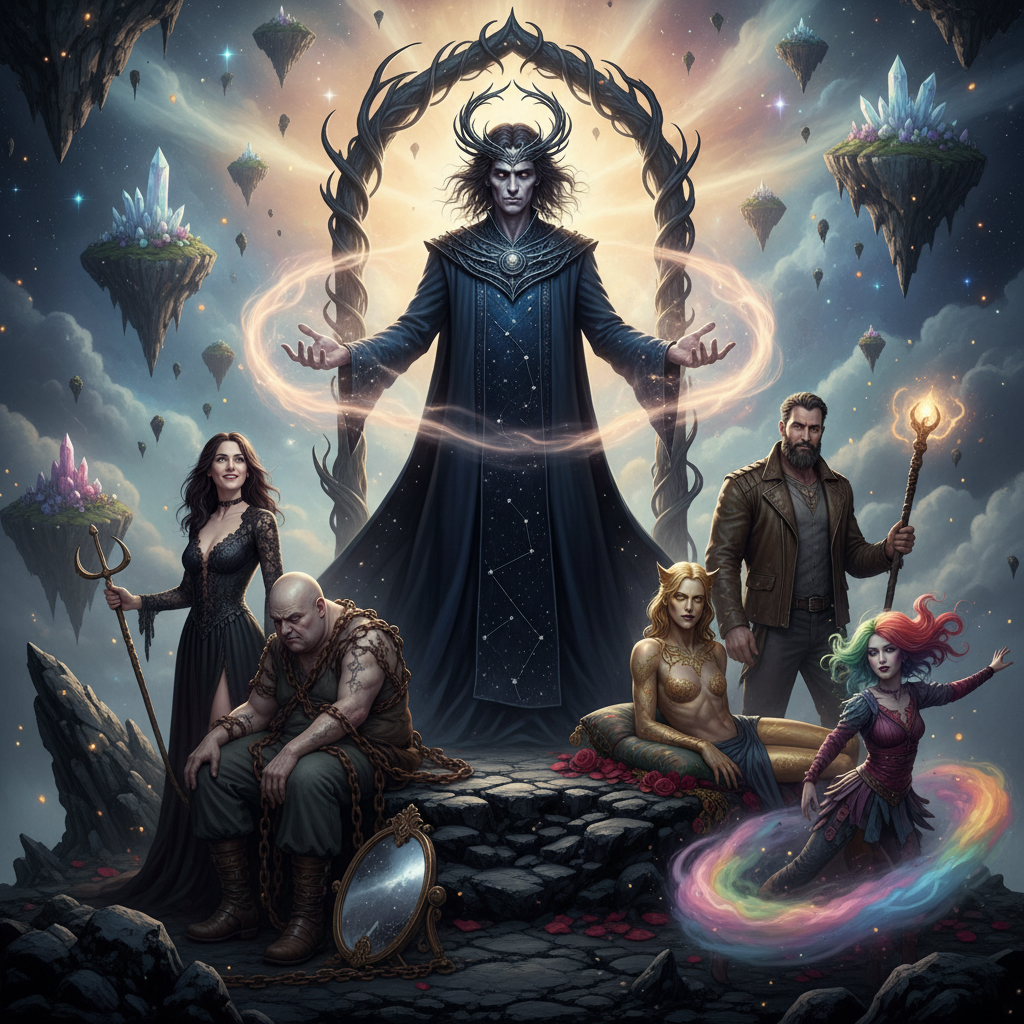
Season 1 had Morpheus (Tom Sturridge) win his victory: escape captivity, recover his seven talismans, capture the rogue Corinthian (Boyd Holbrook), and end the Vortex crisis. In Season 2, Dream is hard at work rebuilding the Dreaming after the damage done in Season 1, until his rare sibling Destiny (Adrian Lester) interrupts with a summons for Death (Kirby Howell-Baptiste), Desire (Mason Alexander Park), Despair (Donna Preston), and Delirium (Esmé Creed-Miles). The resulting family meeting sends Dream on a quest to rescue Nada (Umulisa Gahiga), queen of the First People and Dream’s former lover, from Hell. This time, Dream has to deal with Lucifer (Gwendolyn Christie), who is still bitter from her Season 1 loss. But rather than fight Dream, Lucifer surprises Morpheus by giving up and resigning her station as queen of Hell, giving Dream the key to her now-empty kingdom and the responsibility of selecting Hell’s new keeper from several candidates, from gods like Odin to beings like Order, Chaos, and the demon Azazel.
But Delirium misses their older brother Destruction (Barry Sloane), who abandoned his domain and their family centuries ago. Despair notes that Destruction’s departure was motivated by Delirium’s absence, which Morpheus deduces will lead Destruction to follow her wherever she goes. The chase for Destruction draws Morpheus toward his destiny: shedding more family blood and enraging the Kindly Ones.
High Points, Lowlights, and Well-Worn Shoes
If you are enjoying the first season of The Sandman, you will enjoy the second. The production values are high throughout, with a strong cast and visuals. While some have noted that the pacing is a bit slow, that is by design and not a major complaint.
Season 2 hits its low point in the episode “Time and Night,” when Dream visits his parents, Time (Rufus Sewell) and Night (Tanya Moodie), for assistance. The two scenes where he visits each of them are visually stunning and satisfying because they are canonically accurate (in the comics, the Endless are Time and Night’s children), but the dialogue is clunky and stiff, and even Sewell’s great acting can’t save them from feeling like a therapy session.
Favorite scenes that won’t spoil much for readers: Lucifer asking Dream to chop off her wings for her; Ishtar (Amber Rose Revah), queen of the gods, casting aside all illusions to dance for the first and last time as a god; Dream telling William Shakespeare that he must write The Tempest; and a reformed Corinthian developing a crush on Johanna Constantine (Jenna Coleman). Other vivid sequences: Orpheus, consoling his lost love Eurydice in the Underworld, singing a heartbreaking ballad; Dream deciding to mercifully end the life of his son; and, of course, the Furies, destroying Fiddler’s Green (Stephen Fry), Mervyn Pumpkinhead (Mark Hamill), and Abel (Asim Chaudhry) in their wrath.
Dream’s death is moving, if inevitable, with Dream again taking Death’s hand one last time. With a nod to one of Gaiman’s rare female characters, the series’ original Dreamer, Elizabeth Blair, exits stage left with the new Dream, whom he leaves behind. The new Dream is Daniel Hall (Jacob Anderson), a human father and son, the only Dreamer ever conceived in the Dreaming, with no siblings. Daniel, lost and scared but of a grand future, has awakened as the newest Lord of the Dreaming. Morpheus’ Endless family grieves as their brother is lost, and all the siblings welcome Daniel into their lives and the family.