- calendar_today August 8, 2025
Entering 2025, Arizona’s housing sector shows signs of stabilization after a tumultuous period marked by rapid price increases and rate-driven volatility. Sales across markets such as Phoenix, Tucson, and Flagstaff have slowed from their pandemic-era peaks, yet median prices remain elevated. Buyer interest remains concentrated around newer suburban neighborhoods and smaller cities where relative affordability and lifestyle amenities align.
Transaction volumes have adjusted—but not collapsed. In many metro areas, buyers remain active when homes are well-priced, move-in ready, or situated within growing job corridors.
While mortgage rates have settled from their early 2024 highs, they continue to present affordability challenges. The average rate hovers in the mid-6% range, which, though lower than the prior year’s peak, still significantly impacts monthly mortgage costs for prospective Arizona buyers.
These conditions are prompting strategic behavior: first‑time buyers often wait for modest rate dips, while others opt for adjustable agreements or sales concessions such as buydowns or seller-paid closing costs. The current interest rate environment encourages price negotiation and longer decision timelines.
Inventory Tight, But Slowly Expanding
Arizona’s housing supply remains historically low, though fresh listings are gradually entering the pipeline. Metro Phoenix continues to face tight inventory, especially for entry-level properties. Builders in surrounding markets such as Pinal and Mohave counties have launched developments, but labor availability and cost constraints limit output.
Suburban areas like Surprise, Queen Creek, and Maricopa are seeing modest gains in housing inventory, offering better value compared to central Phoenix and Scottsdale. However, these gains aren’t yet sufficient to meet demand, maintaining upward pressure on prices in high-demand regions.
Migration Drives Demand in Sun Belt Cities
Arizona continues to entice relocators from higher-cost states, thanks in part to its mild winters, lack of income tax, and housing value. Professionals from California, Texas, and Colorado still constitute a noticeable share of buyers moving into Phoenix and Tucson.
This inward migration is augmenting demand for lifestyle-oriented areas like Sedona and Prescott, though affordability headwinds have slowed secondary city booms compared to earlier years. Remote workers with financing flexibility are shaping market dynamics, favoring homes with office space and outdoor utility.
Affordability Strains First-Time Buyers
Despite relative affordability versus coastal metros, many Arizonans continue to grapple with entry costs. Wage growth in service industries hasn’t kept pace with housing inflation, making it difficult for new buyers to afford down payments and monthly repayments.
To address this, several municipalities are offering down payment assistance programs, and developers are creating smaller-footprint floor plans targeted at first-time households. Nonetheless, entry-level inventory remains scarce in Phoenix, Tempe, and parts of Tucson.
Suburban and Exurban Areas Gain Market Momentum
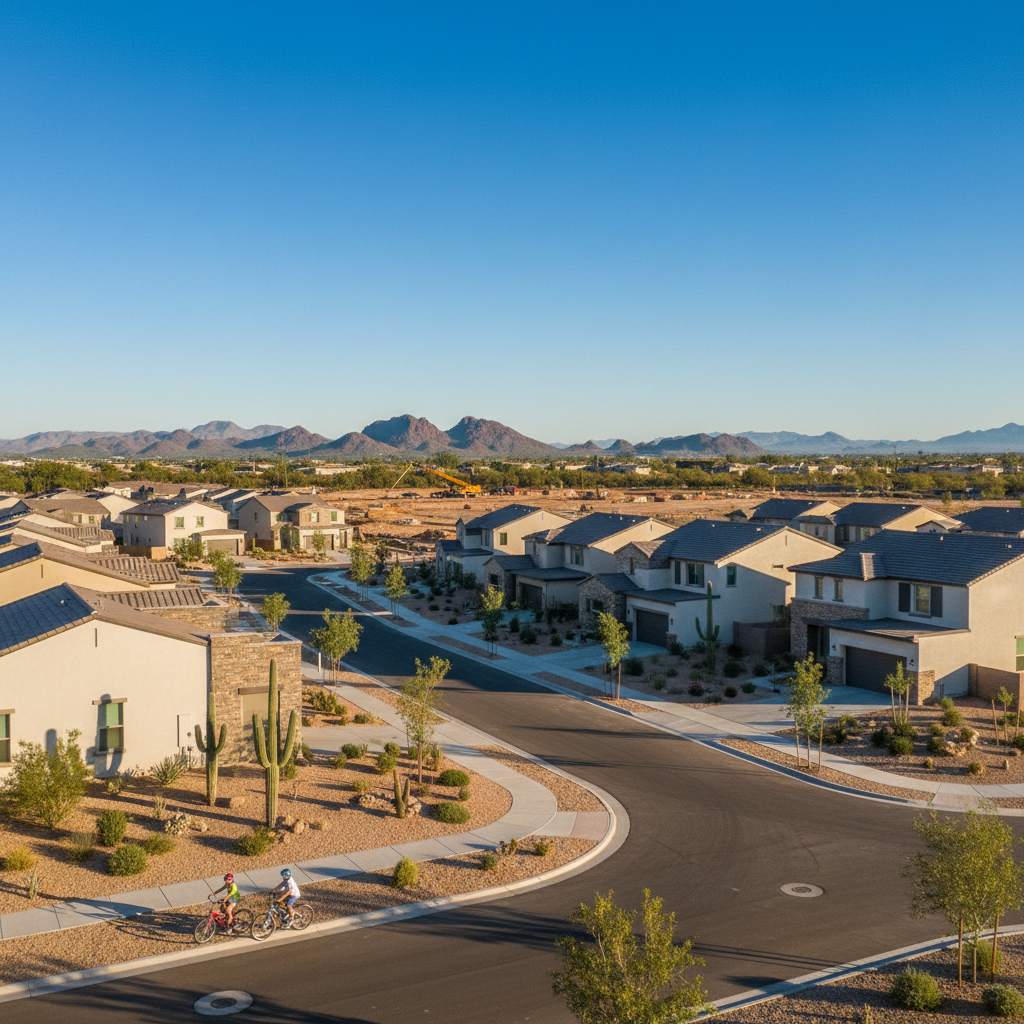
High demand and constrained pricing in central urban zones are pushing buyer interest toward suburbia. Newer master-planned neighborhoods in Gilbert, Chandler, and Oro Valley are attracting those willing to trade commute distance for more square footage and community amenities.
These regions also benefit from lower property taxes, growing infrastructure, and new schools—rewarding buyers with affordability and quality-of-life trade-offs. While home prices have increased in these suburbs, they remain below urban-core levels.
Climate Risks Influence Purchase Decision-Making
Heat waves, wildfire risk, and water access are emerging as important considerations in Arizona’s housing market. Areas prone to extreme temperatures or increasingly stringent floodplain regulations are facing higher insurance costs, impacting both valuations and buyer behavior.
Developments incorporating energy-efficient design, drought-resistant landscaping, and solar installations are gaining in popularity. Buyers—and lenders—are increasingly evaluating long-term resilience when considering property purchases in Phoenix’s hottest zones or wooded regions near Flagstaff.
PropTech Adoption Continues to Reshape the Buying Process
Homebuyers across Arizona are embracing technology in 2025—from AI-driven valuation tools and virtual tours to online financing platforms. Digital brokerages are capturing share when they pair predictive pricing models with robust customer service, especially among younger, tech-savvy buyers.
Flexible scheduling and seamless document workflows are now key differentiators for agents operating competitively in crowded suburban markets. The most successful firms blend personable local knowledge with digital convenience.
Rental Market Dynamics and Build-to-Rent Growth
Renter demand remains robust, particularly in college towns like Tempe and Flagstaff, as well as among service-sector workers in Phoenix. Vacancy rates are low and rents are gradually rising in line with limited supply, though increases have slowed compared to the recent peak.
Build-to-rent projects in suburban locations are expanding—offering single-family style rentals in areas where affordability and space are valued by families who may not yet qualify to buy or prefer leasing for flexibility.
Outlook for Buyers, Sellers, and Investors
- Buyers should prepare for incremental mortgage relief but maintain patience in negotiations. Pre-approval and market readiness will be advantageous.
- Sellers in high-demand areas should price competitively and highlight latest upgrades or energy-efficient features.
- Investors can find long-term returns in growing build-to-rent districts, multifamily projects near universities, or emerging lifestyle communities in secondary cities.