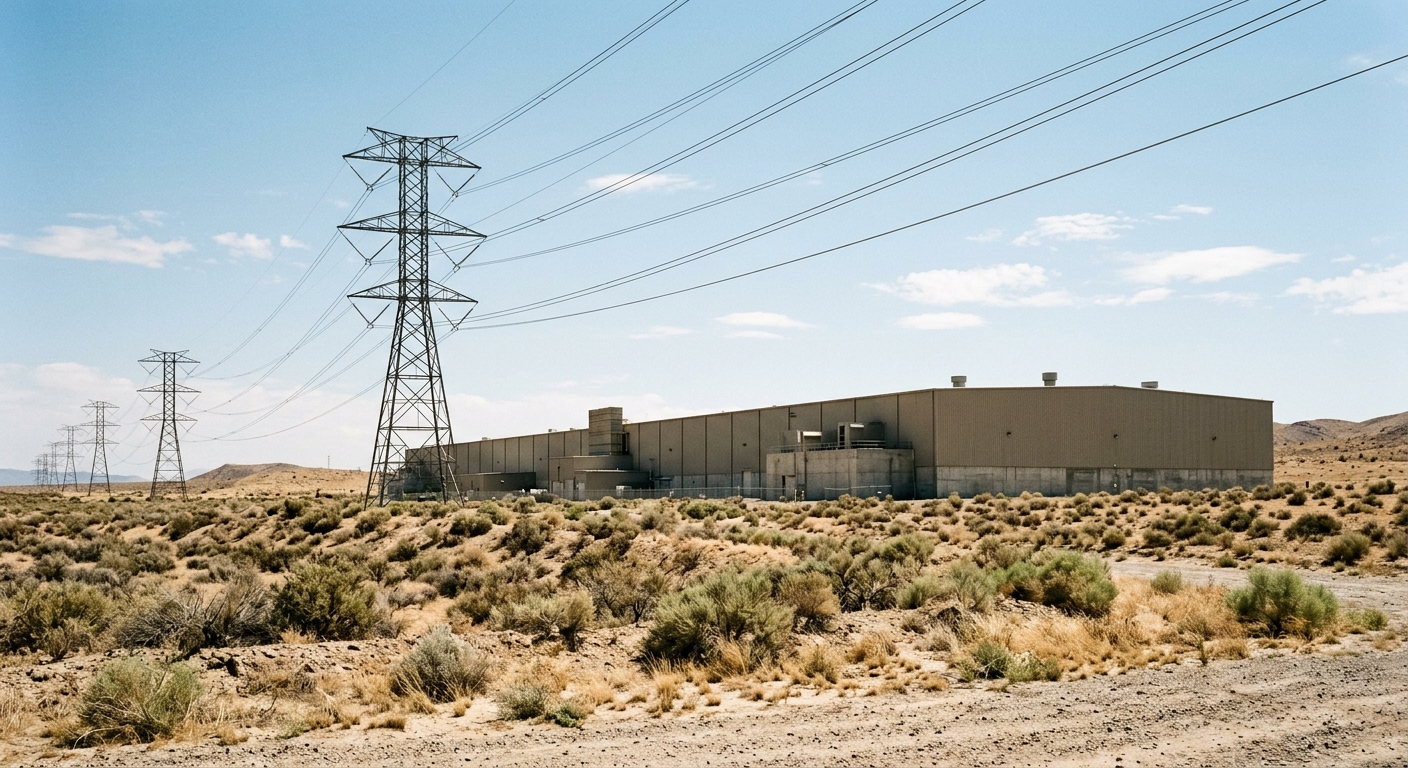
AI-generated illustration; not a photograph of the reported event.
- calendar_today October 9, 2026
Accusations Spark Debate Over Data Center Costs
A consumer advocate’s analysis has ignited a heated debate among candidates for Arizona’s Corporation Commission over whether local utility customers are unfairly shouldering the financial burden of data center growth. The controversy, centered on multi-million-dollar utility costs, has become a focal point in the race for two open Commission seats.
Consumer Advocate Claims Ratepayers Subsidize Data Center Growth
Abhay Padgaonkar, a consumer advocate, scrutinized Arizona Public Service (APS) financial documents and alleged that residential and commercial customers collectively paid $587 million in costs related to data center expansion between 2023 and 2025. The findings, publicized by 12 News, suggest that ratepayers are subsidizing large load users such as data centers. APS, however, rejected the claims as “misleading” in a recent social media statement.
Corporation Commission Candidates Respond
Candidates vying for seats on the Corporation Commission are divided on whether to initiate an independent review of APS’s approach to data center-related utility costs. Democrats Clara Pratte and Jonathon Hill, who are both running for the Commission, advocated alongside small business owners and residential ratepayers for an immediate investigation into Padgaonkar’s analysis. They argued that greater transparency is essential to ensure that ratepayers are not unduly burdened by infrastructure projects serving data centers.
“If you elect us in November, as soon as we take office, we will actually do the job of the Commission and immediately require APS to open their books and immediately require all the utilities to show us where our money is going,” Hill stated.
Incumbent and Commission Push Back on Allegations
Incumbent Commissioner Kevin Thompson, seeking reelection, countered the allegations by expressing support for APS and affirming that utilities adhere to the Commission’s policy that “growth pays for growth.” Commission representatives declined interview requests about Padgaonkar’s analysis and noted their disagreement with the findings. Doug Clark, Executive Director of the Commission, remarked that Padgaonkar had chosen not to participate in APS’s ongoing rate case, where evidentiary records on data center cost shifts could be established.
The Commission also cited historical data suggesting that commercial and industrial customers have, in fact, subsidized residential customers in prior rate cases.
APS Defends Its Cost Recovery Mechanisms
APS maintains that Padgaonkar’s analysis simplifies a complex cost recovery system, failing to account for factors like fluctuating fuel and power costs between 2022 and 2025. The utility underscored that these oversights result in “inaccurate, misleading, and frankly harmful” conclusions for customers.
APS has committed over 4,000 megawatts of electricity for future data center customers and has paused new project additions to its data center queue. In its active rate case, APS is seeking a 45% rate increase for large load users—primarily targeting high-demand customers such as data centers. The company told the Commission it expects to deliver 13.1 gigawatts of electricity to large load customers this year, though it has not publicly disclosed the number of data centers it currently serves.
Calls for Transparency and Closer Oversight
Pratte and Hill insist that the Commission should not accept APS’s assurances at face value. They warn that rate structures and utility investments may leave average customers responsible for system upgrades and power acquisition costs associated with expanding data center demand. Pratte cited instances where individual large load users were the sole customers on a transmission line, leading utilities to distribute those upgrade expenses among the broader customer base.
Hill voiced concern that utilities could be sourcing extra power from other providers specifically for data center operations, but allocating those costs across all ratepayers. He called for a detailed review into the timing, sources, and rates of such energy purchases to better understand their impact on utility costs and electricity rates for consumers.
Outlook
The debate over data center costs, utility pricing, and the transparency of large infrastructure expenditures remains a contentious issue as candidates vie for seats on the Arizona Corporation Commission. The outcome of the rate case and the November election could shape future policies on cost recovery and the financial responsibilities of different ratepayers.
Source: azcapitoltimes.com.