- calendar_today August 25, 2025
Germany, France, and the United Kingdom are on track to activate the return of United Nations sanctions on Iran, three European officials told CNN Wednesday. The so-called “snapback” provision of the 2015 Iran nuclear deal could be triggered as early as Thursday.
The move sets in motion a 30-day process, leaving a brief window for diplomatic efforts. European officials hope that the time pressure will force Tehran to take its offer of diplomacy seriously, open its facilities to inspectors, and make moves to come into compliance with its nuclear commitments.
Iran has threatened “punishing revenge” if the sanctions are reimposed, heightening the possibility of further instability in the region after a period of relative calm following a 12-day conflict in June.
Snapback Deadline Approaching
Snapback is a provision of the 2015 Joint Comprehensive Plan of Action (JCPOA), or Iran nuclear deal. It allows members of the United Nations Security Council to reinstate the full slate of UN sanctions against Iran if it is found to be in violation of the agreement.
The provision will expire in October. European powers are working in coordination with the US on the move this week.
Iran has since expanded its nuclear program well beyond the limits set in the deal, which was already weakened by the US decision under former President Donald Trump to withdraw.
Tehran claims it has no interest in developing a nuclear weapons program, but inspectors and other analysts have been sounding the alarm about the increasing possibility that its work could reach weapons-grade capacity.
“It is clear that returning to the original JCPOA conditions would be almost impossible,” Rafael Grossi, director general of the International Atomic Energy Agency (IAEA), said Wednesday.
US Secretary of State Marco Rubio, who has been in touch with European counterparts this week on coordinating a response to Iran, said in a press conference that snapback was “a very powerful piece of leverage on the Iranian regime.”
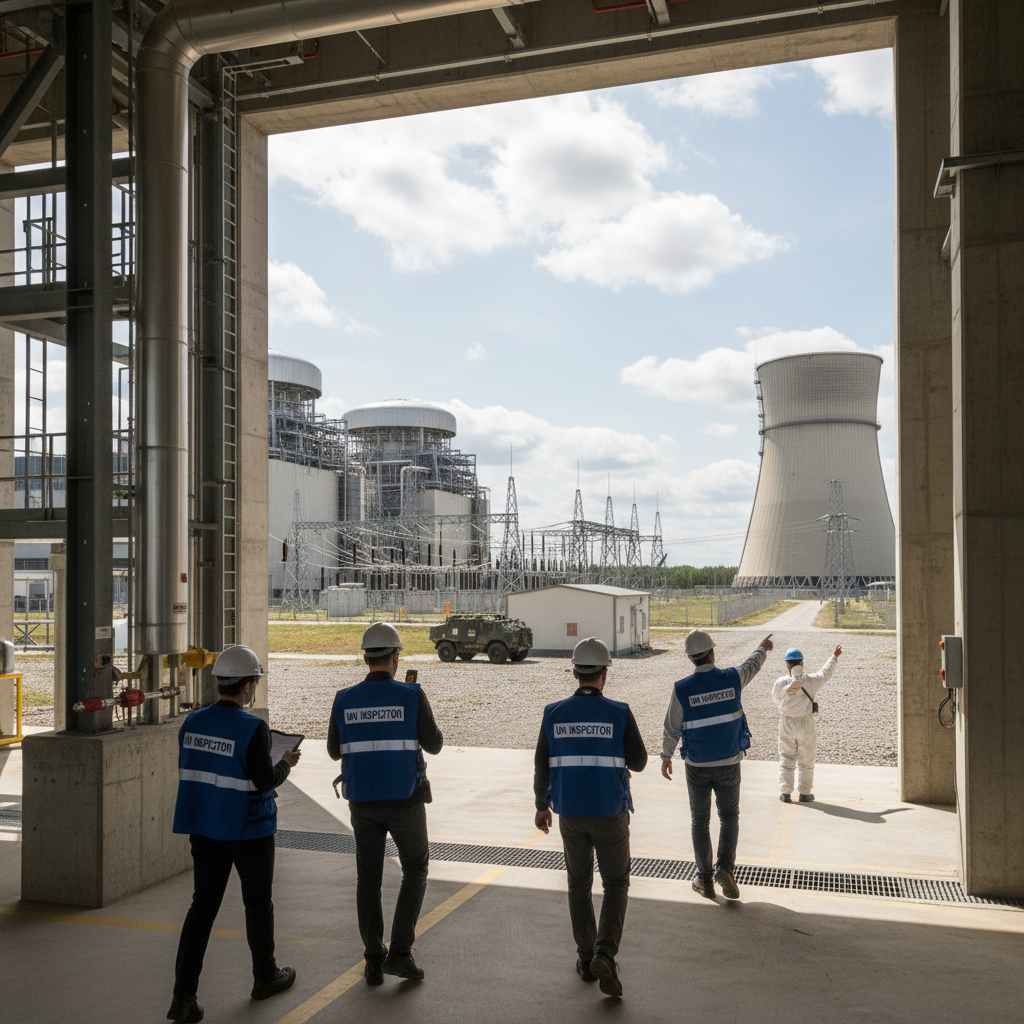
Despite the parliament passing a law earlier this month ordering Iranian authorities to suspend cooperation with international inspectors, the IAEA has reported teams back on the ground this week. Grossi said on Wednesday that inspectors were on-site at Bushehr, the Bushehr nuclear power plant, where a refueling operation is underway.
“Today we are inspecting Bushehr,” Grossi said at a press conference in Washington on Wednesday. “We are continuing the conversation so that we can go to all places, including the facilities that have been attacked.”
IAEA inspections are based on the Nuclear Non-Proliferation Treaty (NPT), of which Iran is a signatory. However, the AFP reports that leaving the NPT is one of a number of options Iran would consider in the event of a return of UN sanctions.
Iranian Foreign Minister Abbas Araghchi said on Wednesday that inspectors were on-site at Bushehr because they were invited to monitor the refueling, which takes place every two years, following a decision by the country’s Supreme National Security Council. However, Araghchi said that there was no “new cooperation” with the IAEA or any agreement to expand the inspectors’ role.
Tensions reached a flashpoint in June after Israel bombed Iran’s nuclear facilities, sparking a 12-day war. Iran retaliated with a range of attacks on Israeli cities in the early days of the conflict. In the final days, US forces began to weigh in, firing at three Iranian sites.
In July, the IAEA pulled its inspectors citing an inability to continue monitoring operations in wartime. In the absence of the agency, media later published satellite images of the entrances to the Isfahan Nuclear Technology Research Center showing damage from the Israeli strike.
The IAEA, for its part, has come under criticism from Iran for making public its concerns about Tehran’s failure to abide by the IAEA’s safeguards rules. Iranian officials claim that the agency was giving Israel a “casus belli” by publicizing its complaints about Iranian non-compliance with the agency’s safeguard rules.
Allowing inspectors back into some facilities at this time has drawn criticism inside Iran. Kamran Ghazanfari, a member of parliament, publicly criticized Speaker Mohammad Bagher Ghalibaf for suggesting there was some value to limited inspections on state TV. Ghazanfari called the move an “explicit violation” of the legislation suspending cooperation with the agency, which was passed in the wake of the June conflict.
Iran’s parliament framed the legislation as an act to defend the nation from foreign attacks, including war, and what it described as a “one-sided” IAEA approach to reporting on the program.
Tuesday Diplomacy
Negotiators from the European Union met with Iranian officials in Geneva on Tuesday in an attempt to avert the snapback sanctions. However, sources told CNN that the talks made little progress.
Prior to the June conflict, US envoy Steve Witkoff had been in talks in Geneva with an aim of reaching a new nuclear deal. The talks had broken down by the start of the war in June.
Grossi said he remained hopeful that there could be de-escalation in the next month. “Don’t forget that there is still time, even if there is the triggering thing, there is a month, and many things could happen,” he added.