- calendar_today August 12, 2025
Arizona’s 2025 Housing Market: Climate, Costs, and Changing Demographics
In 2025, Arizona stands as a symbol of both opportunity and contradiction in America’s housing story. Known for its open skies and sunbelt appeal, the state has become a magnet for remote workers, retirees, and tech-sector expansions. But the very growth fueling its economy is also testing its housing supply, infrastructure, and environmental limits.
Phoenix continues to dominate the landscape as the nation’s fifth-largest city. The Valley of the Sun added more than 100,000 residents over the past year, according to state data, and with them came new home developments, infrastructure projects, and climbing real estate prices. Yet the demand has begun to outpace planning in many regions, pushing affordability concerns to the forefront.
A Boom with Uneven Benefits
In metro Phoenix, the median home price now hovers around $470,000—up roughly 6% from 2024. New builds in suburbs like Gilbert, Buckeye, and Queen Creek offer some relief, but high construction costs, limited water access, and labor shortages persist.
Tucson, Arizona’s second-largest city, is seeing a quieter yet still notable real estate revival. With a median home price closer to $340,000, it has become a refuge for buyers priced out of the Phoenix area. However, local leaders warn that the same affordability pressures may follow unless proactive zoning and infrastructure strategies are adopted.
Rural counties, including Yavapai and Mohave, are experiencing an influx of second-home buyers and retirees, which is transforming local economies—but also placing strain on medical services, road systems, and housing stock once aimed at year-round residents.
Climate: The Unspoken Variable
Arizona’s real estate narrative cannot be separated from its climate. With water scarcity escalating across the Southwest, cities like Phoenix and Scottsdale are tightening restrictions on new developments. The state recently imposed groundwater limits for new subdivisions in Maricopa County, citing unsustainable long-term usage.
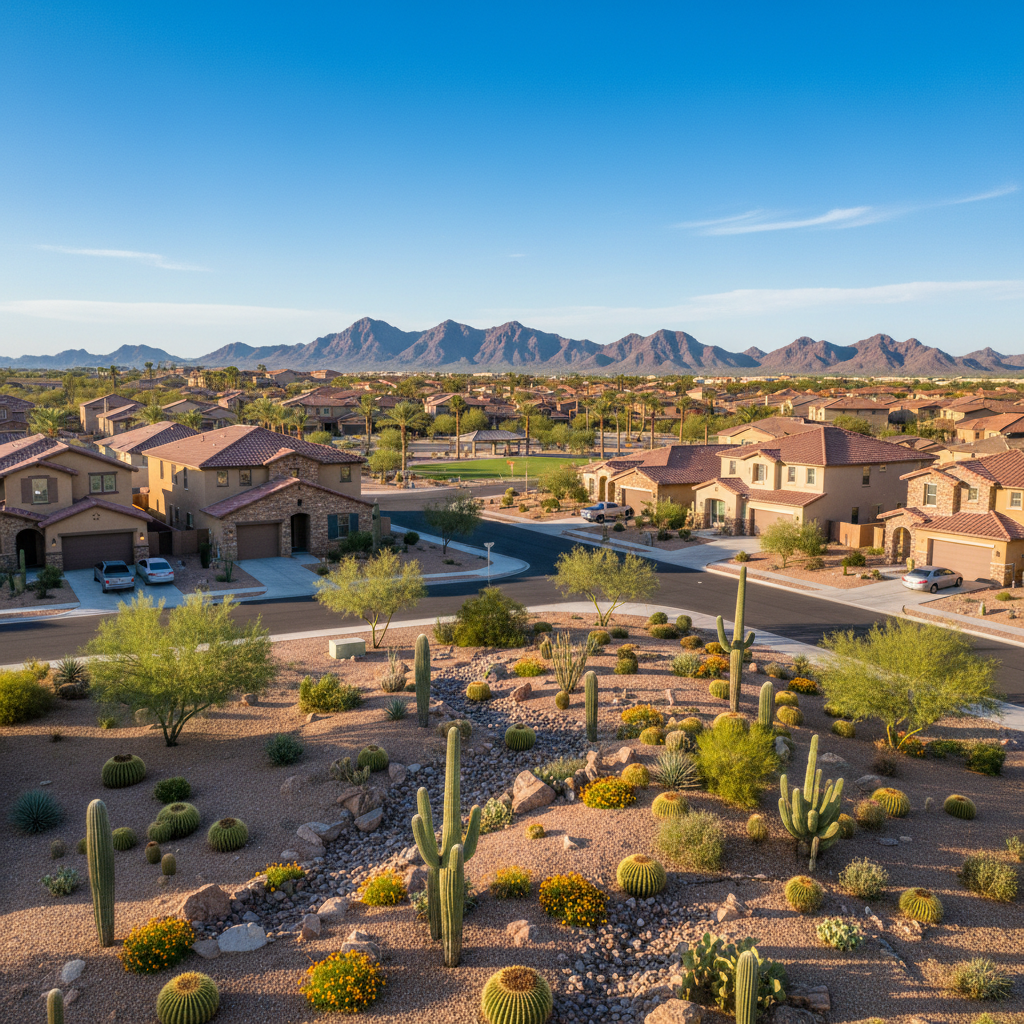
Builders are adapting with more efficient construction and desert landscaping, but water policy is becoming a key constraint for investors and developers alike. Questions about Arizona’s carrying capacity—how many people the land can support—are no longer theoretical. They’re baked into real estate forecasts and investor memos.
Meanwhile, rising temperatures are also impacting livability. With some areas experiencing over 35 days annually above 110°F, developers are incorporating more indoor cooling infrastructure and shaded community designs. Still, concerns linger about how sustainable this expansion can be.
Migration Patterns Reshape Neighborhoods
The influx of newcomers from California, Illinois, and the Pacific Northwest is reshaping demographics across Arizona. These migrants often bring remote jobs, cash offers, and higher budgets, pricing out some longtime Arizonans in the process.
This has led to increasing calls for tenant protections and affordable housing initiatives, particularly in gentrifying neighborhoods of central Phoenix and downtown Tucson. Some cities have responded with tax incentives for multifamily housing or restrictions on short-term rentals, though results vary.
Young professionals and retirees alike see Arizona as a tax-friendly state with a lower cost of living compared to the West Coast. But those arriving now face a tighter, more competitive market than even just two years ago.
The Rental Squeeze
Arizona’s rental market has tightened considerably. In Phoenix, average rents now top $1,850 per month for a one-bedroom an 8% increase year-over-year. Tucson’s rental prices are also climbing steadily, fueled by demand from students, service workers, and new arrivals waiting to buy.
Affordable housing nonprofits are working with local governments to create rent-stabilized units and invest in transitional housing, though progress is slow. In the meantime, tenants are increasingly pushed to the outer edges of cities, increasing commute times and straining public transit systems.