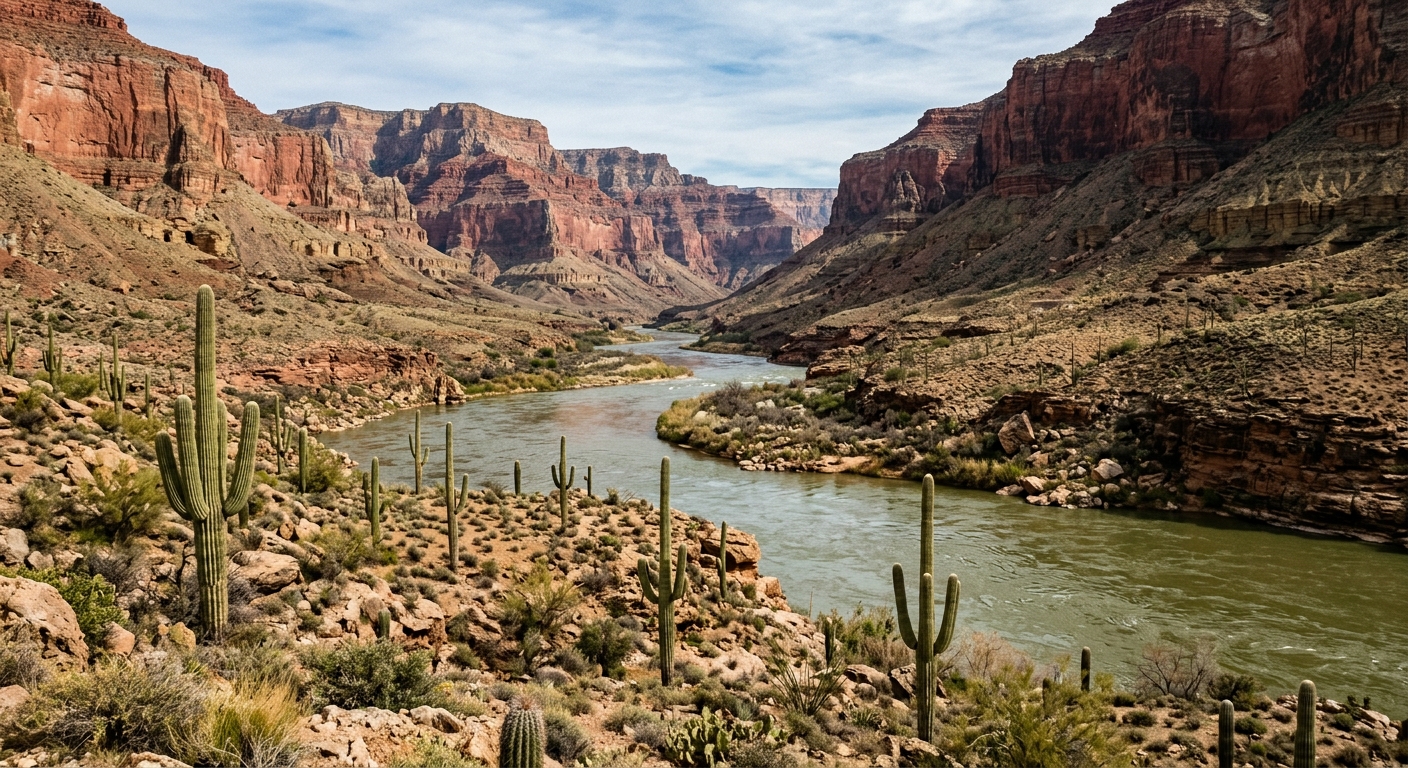
AI-generated illustration; not a photograph of the reported event.
- calendar_today September 23, 2026
Arizona, June 2024 — As debates about federal national monument protections intensify, a clear consensus has emerged in Arizona: the preservation of public lands remains a top priority for residents across the political spectrum. With public lands at the center of both ecological and economic discussion, recent developments reflect the region’s ongoing commitment to environmental stewardship and water security.
Bipartisan Support for National Monuments
New polling by Echelon Insights demonstrates overwhelming bipartisan support for the continued protection of national monuments within Arizona. According to the survey, 83% of Arizona voters oppose efforts to eliminate these protected areas, including 71% of Republicans—a sign that national monuments resonate well beyond partisan divides. The Ironwood Forest and Baaj Nwaavjo I’tah Kukveni monuments, in particular, have drawn focus due to their significant role in arizona conservation efforts.
Public Land Protection: Core to Arizona’s Future
Public land protection is widely regarded as a core conservative principle in Arizona. Proponents such as Matt Salmon emphasize that safeguarding public lands directly supports economic stability and shapes the state’s future. The preservation of these landscapes is seen as vital for both metropolitan development and for upholding values of environmental stewardship that benefit all Arizonans.
Water Security Tops the List of Concerns
Water security consistently emerges as the leading concern among Arizona voters. A substantial 86% of respondents recognize that protecting critical watersheds is indispensable to the region’s future, especially as these watersheds feed into the Colorado River. The river remains a lifeline for major population centers including Phoenix and Tucson, impacting not only drinking water but also agriculture and daily life throughout the region.
Economic Benefits Through Outdoor Recreation
The link between public lands and economic vitality is especially strong in Arizona. Outdoor recreation and tourism, fueled by the state’s diverse public lands and national monuments, generate billions of dollars each year and support thousands of local jobs. In contrast to arguments favoring resource extraction, most Arizona residents believe that preserving these lands fosters greater economic stability and long-term prosperity for local communities.
Public Lands and Tribal Heritage
Public lands in Arizona are intimately tied to tribal heritage, with many protected sites holding deep cultural and historical significance to Indigenous communities. Conservation efforts preserve not only the natural landscape but also the living stories and traditions of Arizona’s Tribal Nations, ensuring that these connections are honored for generations to come.
Republican Support Signals Broad Consensus
The strong republican support for ongoing public land protection underscores how these issues transcend party lines. Across Arizona, residents from both urban and rural communities agree that environmental stewardship must guide policy decisions relating to national monuments and water security. This consensus signals a statewide dedication to both arizona conservation values and the responsible management of public resources.
A Call to Action for Leaders
As Arizona faces pressing challenges around water and land management, elected officials are urged to prioritize environmental stewardship and maintain robust protections for public lands. Advocates argue that these actions not only safeguard clean drinking water, honor tribal heritage, and stimulate outdoor recreation, but also reinforce economic stability and the state’s future prosperity.
In summary, the latest data and community sentiment across Arizona confirm that conserving public lands is far more than a political issue—it is a shared commitment to the region’s water security, cultural heritage, and economic well-being. Protecting these vital landscapes remains essential for ensuring a strong, sustainable Arizona for years to come.