- calendar_today August 7, 2025
Solis Game Studio Faces Shipping Nightmare Amid Tariff News
If you follow the board game industry, you’ve likely seen coverage this week of what many fear is an existential threat to the industry. Jamey Stegmaier, the popular designer of board games such as Scythe and Wingspan, lamented this week that an industry already characterized by razor-thin margins, hyper-collaboration, and innovation has just been handed a substantial financial punch that will seriously damage it.
In an emotional blog post, Stegmaier wrote, “Last night I tried to work on a new game I’m brainstorming, but it’s tough to create something for the future when that future looks so grim. I mostly just found myself staring blankly at the enormity of the newly announced 54 percent tariff.” The words from one of the industry’s most successful designers, responsible for some of the world’s most popular games, were a surprising departure from the norm—painfully personal, and vulnerably so—but one with which many in the industry can empathize.
A Global Business Model with a Sudden Twist
The fact is that the U.S. board game industry depends on overseas, particularly Chinese, manufacturing. While other countries have board game production facilities (Germany in particular has a spiritual connection to the modern tabletop gaming renaissance and is home to many board game manufacturers), China is the universal choice for “everything under the sun” in terms of production. This not only includes printed cards, but custom plastic miniatures, wooden tokens, die-cut boards, and specialty dice, among other things.
Domestically, creating those components isn’t impossible, but it is almost always prohibitively expensive. Stegmaier shared that the lowest quote he received from an American manufacturer was for $10 per game, and that was for a “standard empty game box.” The same $10, by contrast, can get you production, packaging, and shipping of an entire game in China.
It’s for this very reason that the new tariff will be so disruptive. For most U.S. board game publishers, but especially the smaller or mid-tier, margins are typically slim to begin with, and this kind of shock increase in cost, with no time to absorb or prepare for it, is a community-wide gut punch.
An Industry Speaks Up
Meredith Placko, the CEO of Steve Jackson Games and the publisher of popular titles such as Munchkin, spoke out on the issue as well. Her company’s business model is no different than most other board game companies: overseas production for the aforementioned all-in-one reasons.
“What I’ve been hearing a lot in the last day or so,” Placko wrote, “is that from readers and friends who know me as the Steve Jackson Games CEO, ‘Why not just manufacture in the US?’ I wish I had an answer to that. Hell, I wish I had a business model that would allow us to do that.” Placko continued in her post, once again laying out the commonly understood fact that the necessary infrastructure to support the domestic manufacturing of full-scale board games, specialty dice making, die-cutting, custom plastic and wood components, and more, does not meaningfully exist in the U.S. today.
For Placko, this is far more than simply a logistical challenge: it’s a tectonic disruption of the industry. “This is not just a policy change. This is a seismic shift,” she wrote.
Rob Daviau, the co-founder of Restoration Games and the designer behind titles such as Pandemic Legacy, has also been a prominent and vociferous voice on the issue for some time. In a tweet thread late last year, Daviau went so far as to say he’s had almost every business meeting with industry partners be “an existential crisis about our industry.” Speaking with BoardGameWire this week, he described an all but inevitable “great collapse in the hobby gaming market in the US” if tariffs such as this were ever to be applied.
Gamers Will Be Affected, Too
The potential impact, as should be clear by now, will go beyond publishers and designers themselves. Gamers will likely be affected as well. The prices of new games will almost certainly increase at retail. Some publishers will seek to absorb the extra cost through cuts elsewhere, meaning cheaper production quality for the same price. Some will choose to simply delay or reduce new releases.
Local game stores, which have struggled mightily in recent years with online competition, are also at risk. Gamers may well choose to stick with games they already own, many of which go unplayed on what fans often refer to as their “shelves of shame,” or choose to buy online at lower prices, further challenging the brick-and-mortar stores.
“Within a few months, US companies will lose a lot of money and/or go out of business,” Stegmaier predicted. “And US citizens will suffer from extreme inflation.”
Workarounds Are Few, Too Little, Too Late
Stegmaier and others have pointed out some potential workarounds: having products shipped to a distributor outside the U.S. (many European markets, for instance, seem to be exempt or only have a lower duty) before shipping them to the U.S. But as Stegmaier himself pointed out, this is no real workaround for U.S.-based companies. 65 percent of company sales for Stegmaier’s Hex Games are U.S.-based; for most in the industry, it is much higher. The price hit will be just as hard.
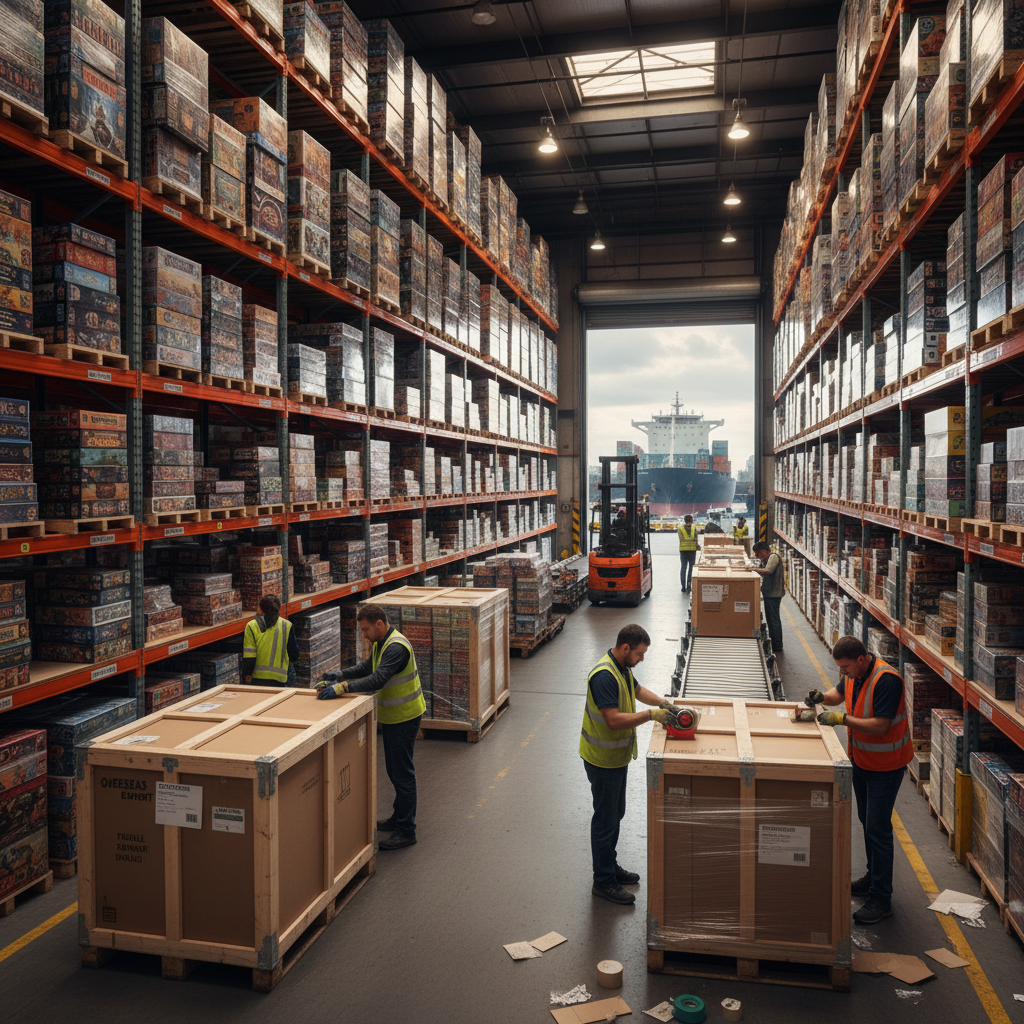
Perhaps more frustrating is the timing. In theory, at least, for games that are still being designed or in early production, companies have time to adjust their budgets and financial outlooks. But for games already in production and on ships leaving China now, there is no avoiding the tariff. Chris Solis, the head of California-based game publisher Solis Game Studio, told Ars Technica about the 8,000 games currently leaving a factory in China this week: “I need to scramble to figure out how to cover the import bill.”
Industry-Wide Shock
GAMA, the Game Manufacturers Association, an advocacy group for board game publishers, has been actively working with congress members and the Trump administration to point out the economic and community impact the tariff would have on the industry. To date, those discussions have largely fallen on deaf ears.
As the dust settles and the full impact of the tariff is revealed in the coming months, it’s clear that the board game industry, perhaps one of the most fun, vibrant, innovative, and collaborative industries out there, is set to take a body blow unlike anything in its modern history.