- calendar_today August 10, 2025
The latest feature from OpenAI, called “Images in ChatGPT,” allows users to generate images directly through the ChatGPT interface. This development uses the new GPT-4o model to give users the ability to generate images through conversation, thereby making a substantial advancement in AI content production.
All ChatGPT subscription tiers now feature this new functionality, which includes the free version as well as Plus, Pro, and Team, in order to expand access to advanced image generation tools. OpenAI spokesperson Taya Christianson mentioned that free tier users currently face the same usage restrictions as DALL-E 3, which limits them to three images per day, but those limits could change if demand requires it. GPT-based custom solutions will remain available to DALL-E enthusiasts.
OpenAI’s research lead Gabriel Goh identified GPT-4o’s transformative potential as an “omnimodal” model that processes various data types, including text, images, audio, and video. The model now exhibits advanced “binding” functionality, which resolves a longstanding problem encountered in AI image generation. The GPT-4o model manages 15 to 20 objects without color or shape confusion, thus overcoming the common misinterpretation issues of previous models.
The system’s improved text rendering stands out as one of its main advancements. AI-generated images traditionally display text that appears distorted or lacks coherence. Goh described how the project required extensive iteration through several months before they achieved the desired results. The team has developed a dependable text rendering process that ensures image text remains functional despite the ongoing difficulty of achieving perfect results for small text.
The design of the system differs from standard diffusion models, which image generators commonly use by implementing an autoregressive technique. The image generation method that creates visuals sequentially from left to right and top to bottom, similar to text writing processes, appears to enhance text rendering and binding abilities.
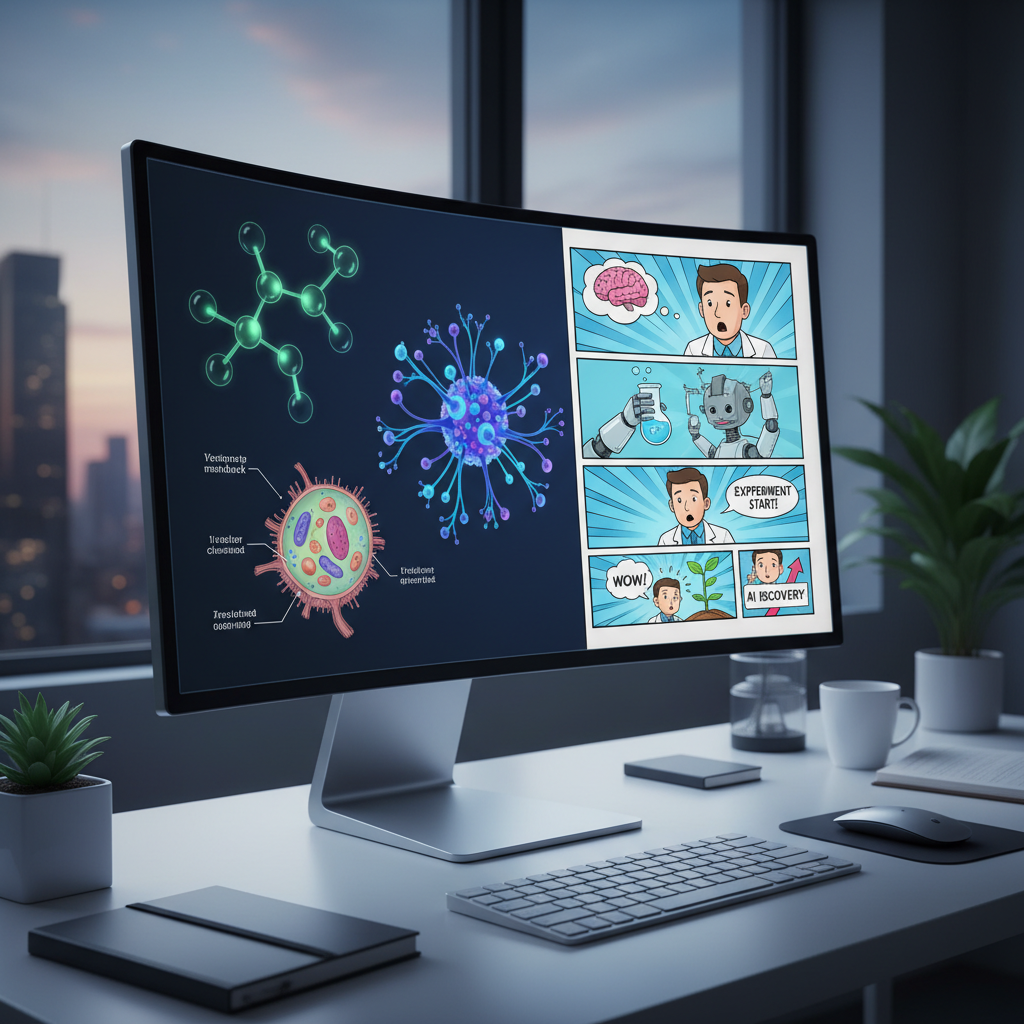
OpenAI introduced their system’s versatility in a presentation by demonstrating its ability to produce detailed scientific diagrams of Newton’s prism experiment, create multi-panel comics with uniform characters and dialogue, and design informational posters with correct text. The demonstration included practical examples of how the system created transparent background images suited for stickers and restaurant menus, as well as logos.
Jackie Shannon, who leads multimodal products at ChatGPT, discussed the system’s capability to utilize comprehensive world knowledge. When she draws an image, her own skill set’s limitations, but the world knowledge she has acquired, play a significant role. The model incorporates world knowledge, which enables users to retrieve an image of Newton’s prism experiment without needing to provide additional context.
OpenAI maintains that the improved quality and expanded capabilities of the image generation process make the slightly increased wait time worthwhile. Shannon acknowledged that improvements can be made regarding latency, but emphasized that the quality of images and their advanced capabilities, along with world knowledge, compensate for the waiting time.
Addressing Ethical Concerns and Ensuring Responsible Deployment
OpenAI addressed potential misuse worries by emphasizing its strong protective measures. The system incorporates safeguards to block CSAM requests as well as prevent watermark removal and the creation of sexual deepfakes. OpenAI creations will be marked with standard C2PA metadata in all generated images despite the absence of visual watermarks. The organization continues to use internal software solutions to verify images.
Shannon said that no system is ideal for this purpose, yet we keep enhancing our protections while viewing this as the fundamental stage. Users retain ownership of all images created through ChatGPT and have full usage rights within our established usage policies.
The “Images in ChatGPT” feature improves OpenAI’s flagship product while establishing new benchmarks for powerful and accessible AI-driven image creation. OpenAI demonstrates its dedication to responsible deployment by emphasizing enhanced binding capabilities, advanced text rendering features, and robust protective measures within its powerful tools.
The company demonstrates its innovative image generation approach through the transition to autoregressive techniques, which stand apart from traditional diffusion models. OpenAI shows its dedication to ethical AI usage through its focus on user ownership and metadata integration, which enhances transparency. The integration represents a major move to make advanced AI image creation accessible to everyone while managing potential risks and improving user safety.