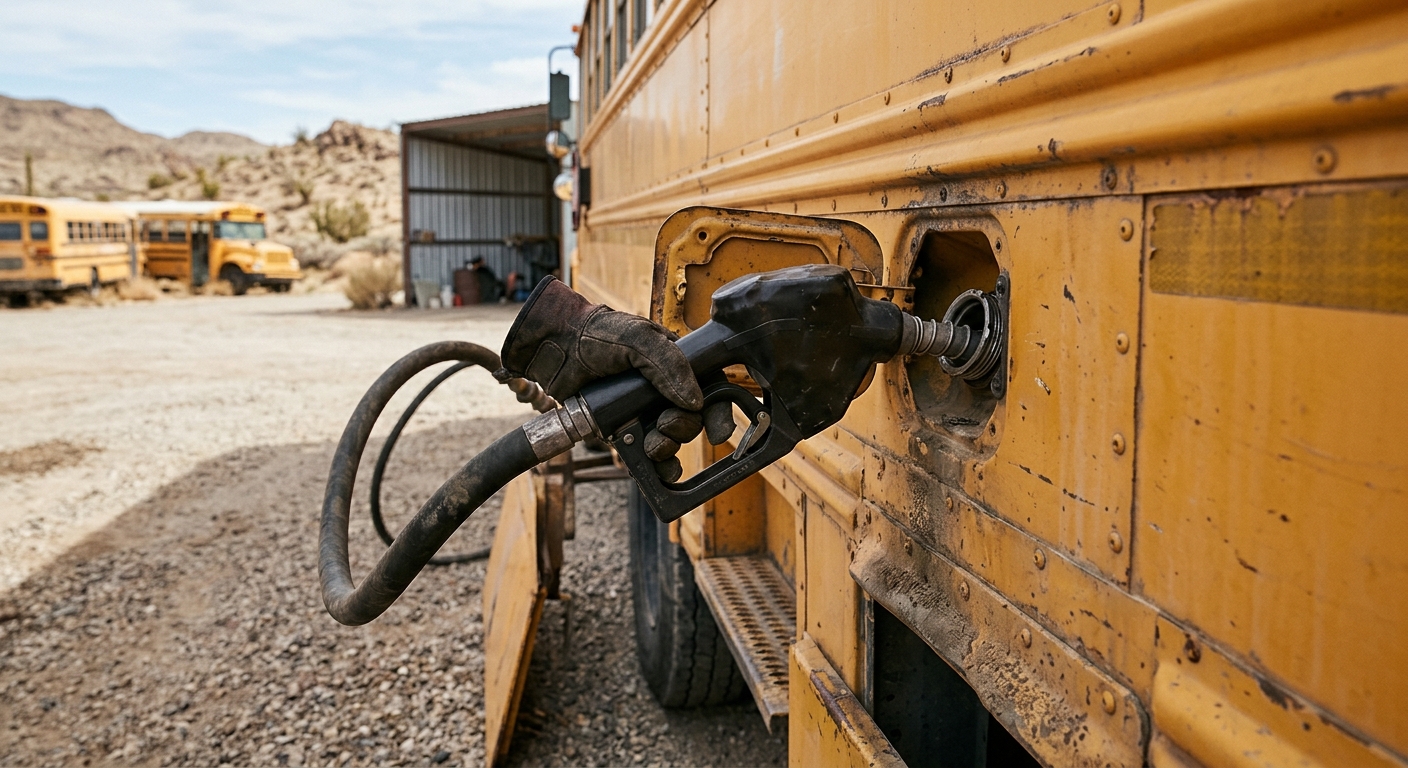
AI-generated illustration; not a photograph of the reported event.
- calendar_today October 9, 2026
Diesel Price Surge Shakes Arizona School District Transportation Budgets
Arizona school districts are facing mounting challenges as diesel prices climb to historic highs. At the Cave Creek Unified School District, the effects are felt every morning when school bus drivers line up to fill their 100-gallon tanks, a costly routine that now impacts the entire district’s finances and operations.
Nationwide Diesel Price Spike Impacts Local Fleets
According to data from AAA, diesel prices have experienced a sharp rise over the past year. The national average price of diesel increased from $3.69 to $6.32 per gallon. For fleets such as Cave Creek Unified’s 24 buses, which consume about 7,000 gallons each month, these rising fuel prices have created a significant budget impact.
Fleet Management: Combining Routes and Tracking Efficiency
Ken Doss, Cave Creek Unified’s fleet supervisor, has seen firsthand how higher diesel fuel costs influence both school budgets and daily operations. On average, most bus drivers are refueling two to three times a week, with those covering outlying areas needing even more frequent fill-ups. To control transportation costs, the district is implementing measures such as combining bus routes and using GPS tracking to monitor mileage and identify opportunities to improve route efficiency. “We’re watching all the mileages. If there’s a route that we know we can combine and bring that mileage down, we’re definitely doing it,” Doss stated.
Trying Alternatives: Gasoline Buses and Budget Constraints
To save on fuel costs, the district has started to rely more on gasoline-powered buses, which can travel about 14 miles per gallon compared to diesel buses’ five miles per gallon. However, the transition to alternative fuel options within Arizona school districts remains limited, with most still operating diesel fleets and only a few able to switch fuels.
Rising Costs Affect Drivers and Extra-Curricular Activities
Janelle Brabec, lead bus driver and trip coordinator at Cave Creek Unified, experiences the effects on a daily basis. Bus drivers like Brabec—who fills up about every three days—are trained to never let fuel levels drop under half a tank for emergencies. She notes that the higher diesel prices impact every trip, from daily routes to transporting athletes and students to extra-curricular events. The increased transportation costs also jeopardize the district’s ability to offer pay raises and recruit new drivers.
Statewide Impact: Contingency Funds and Difficult Choices
Jim Migliorino, executive director and CFO of the Arizona Association of School Business Officials, explains that most Arizona school districts are feeling the pressure of these fuel prices. Budgets are inflexible, so when diesel fuel costs exceed expectations, districts must draw from contingency funds or seek savings elsewhere. In extreme cases, districts may have to forgo other expenses, as they are legally required not to exceed authorized budget capacities.
Looking Forward: Field Trip Adjustments and Mitigation Strategies
Doss recalls prior instances where surging fuel prices led to the cancellation of summer field trips at other districts. Currently, Cave Creek Unified has increased what it charges schools for field trips in an effort to absorb some of the additional diesel fuel costs. These ongoing adjustments reflect how Arizona schools are adapting transportation strategies to cope with elevated fuel prices and their effect on the overall budget.
Source: azcapitoltimes.com.