- calendar_today August 20, 2025
.
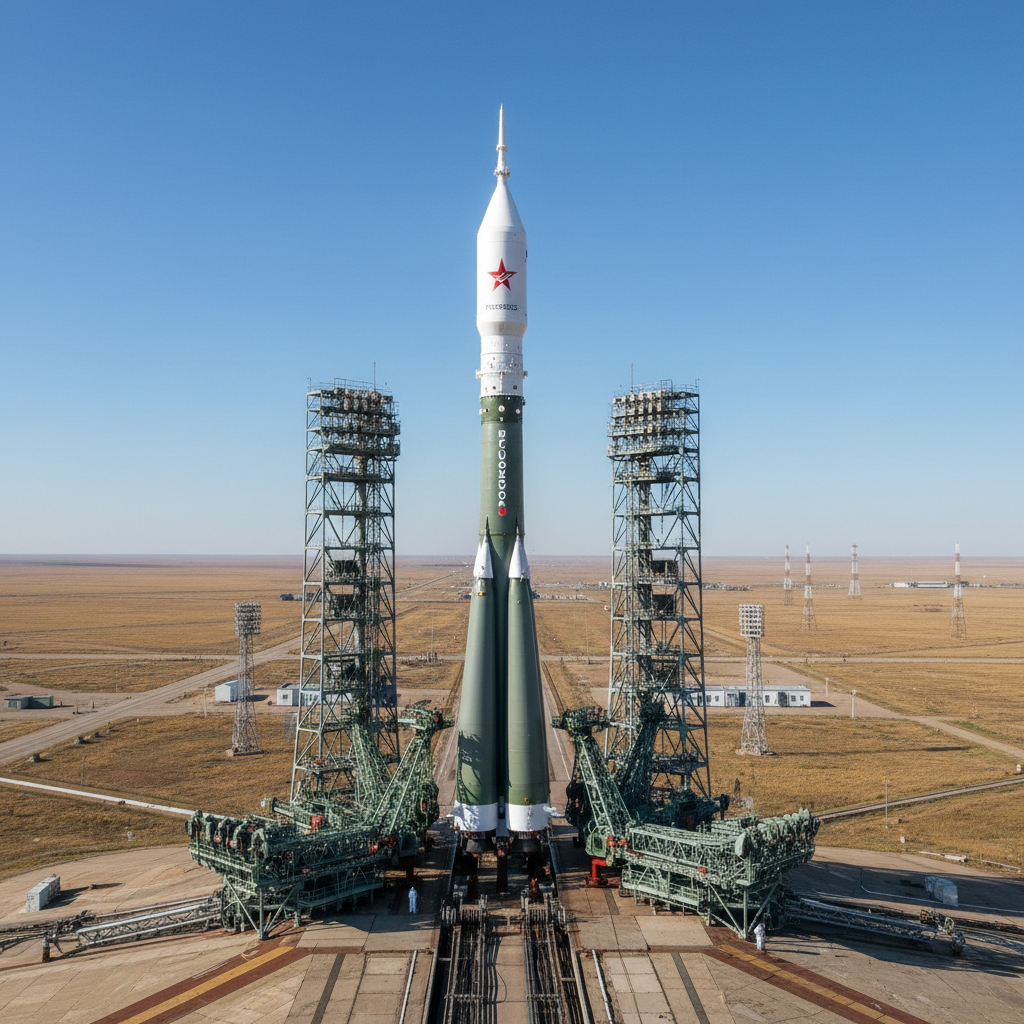
Russia is set to fly its latest rocket, Soyuz-5, before the end of this year. Dmitry Bakanov, the head of Roscosmos, made the announcement in an interview with the state media agency TASS.
“Yes, we are planning for December,” he said. “We are close to the launch of this Soyuz vehicle for the first time.” The rocket will lift off from the Baikonur spaceport in Kazakhstan. If it goes well, the launch will be the maiden flight of a rocket that has been in development for more than a decade. Roscosmos will conduct several trial launches of Soyuz-5. The vehicle, however, will not be in operational service until 2028.
Soyuz-5, also known as Irtysh, is not a completely novel concept. In many ways, it is a Russian-made version of the Zenit-2 rocket, whose original design dates back to the 1980s. Zenit was developed by the Ukrainian Yuzhnoye Design Bureau. Built in Ukraine, the rocket used Russian-made RD-171 engines. Zenit rockets became one of the few positive examples of post-Soviet cooperation in the aerospace industry. Moscow and Kyiv worked closely together to put Zenit launch vehicles into service. Russia’s invasion of Ukraine in 2022 put an end to that cooperation. In late 2023, Russian forces destroyed the Ukrainian plant that had once assembled Zenit rockets.
Soyuz-5 is a larger version of Zenit that Russia built entirely by itself. That means the rocket’s design is free of any Ukrainian technology. For Moscow, the strategic implications are clear: it has ended a state of dependency and can also retire the country’s long-serving Proton-M launcher.
A Bridge Between Old and New
Technically speaking, Soyuz-5 is a medium-lift rocket. It can deliver about 17 metric tons to low-Earth orbit (LEO). This capability comes from slightly larger propellant tanks than on Zenit. The rocket’s powerplant is the RD-171MV engine. This new model is part of a legendary engine family with a history stretching back decades.
RD-171M engines are descendants of the rocket system that powered the Soviet Union’s short-lived space shuttle, Buran. The Energia program dates to the 1980s. This combination was capable of putting about 100 metric tons into orbit, but it flew just one mission. The current RD-171MV model stands out for one reason: it contains no Ukrainian components. Fueled by kerosene and liquid oxygen, it produces more than three times the thrust of NASA’s Space Shuttle main engine. It remains the most powerful liquid-fueled rocket engine in use.
The Soyuz-5 rocket it powers, however, is expendable. Newer rivals like SpaceX’s Falcon 9, by contrast, are purpose-built for reusability. This distinction may determine whether Soyuz-5 can ever capture a significant portion of the international launch market.
But even if it doesn’t, the new rocket has a clear purpose for Roscosmos. With limited budgets in the face of the war and international sanctions, Russia has struggled to develop a completely new and reusable rocket. The Amur system, also known as Soyuz-7, was supposed to fill that niche. With a reusable first stage and methane-fueled engines, Amur promised to offer Russia a cost-effective alternative to SpaceX in the coming decades. Delays have postponed its debut to no earlier than 2030.
Until then, Soyuz-5 will serve as a stopgap solution. The rocket won’t open new possibilities, but it will keep Russia’s space industry afloat—albeit with technology that, in a way, is rooted in Soviet times.
The prospects for commercial use, on the other hand, are more uncertain. The global launch market has changed drastically over the past decade, with SpaceX and Chinese companies offering more cost-effective and flexible options. Russia still flies Soyuz-2 rockets for crewed missions and the Angara family for heavier payloads. Neither has been able to find a stable foothold in the commercial launch business. It remains to be seen whether Soyuz-5 can change that.
Still, Roscosmos deserves credit for managing to get Soyuz-5 so close to launch in the first place. A successful flight in December would prove Russia can put new hardware on the launch pad despite sanctions and flatting budgets.
Soyuz-5 will not reinvent rocketry. It will not single-handedly redefine the economics of commercial spaceflight. But for Russia, the new launcher still represents progress. It is a step toward independence from foreign technology and a bridge to the future, whether that future is built on Amur or some other concept still on the drawing board.