- calendar_today September 1, 2025
Honda is formally now part of the space conversation. Originally most known for its robots, motorcycles, and cars, the company has made an unexpected and major vertical leap. This week, it successfully launched and landed an experimental reusable rocket, first in line of space exploration.
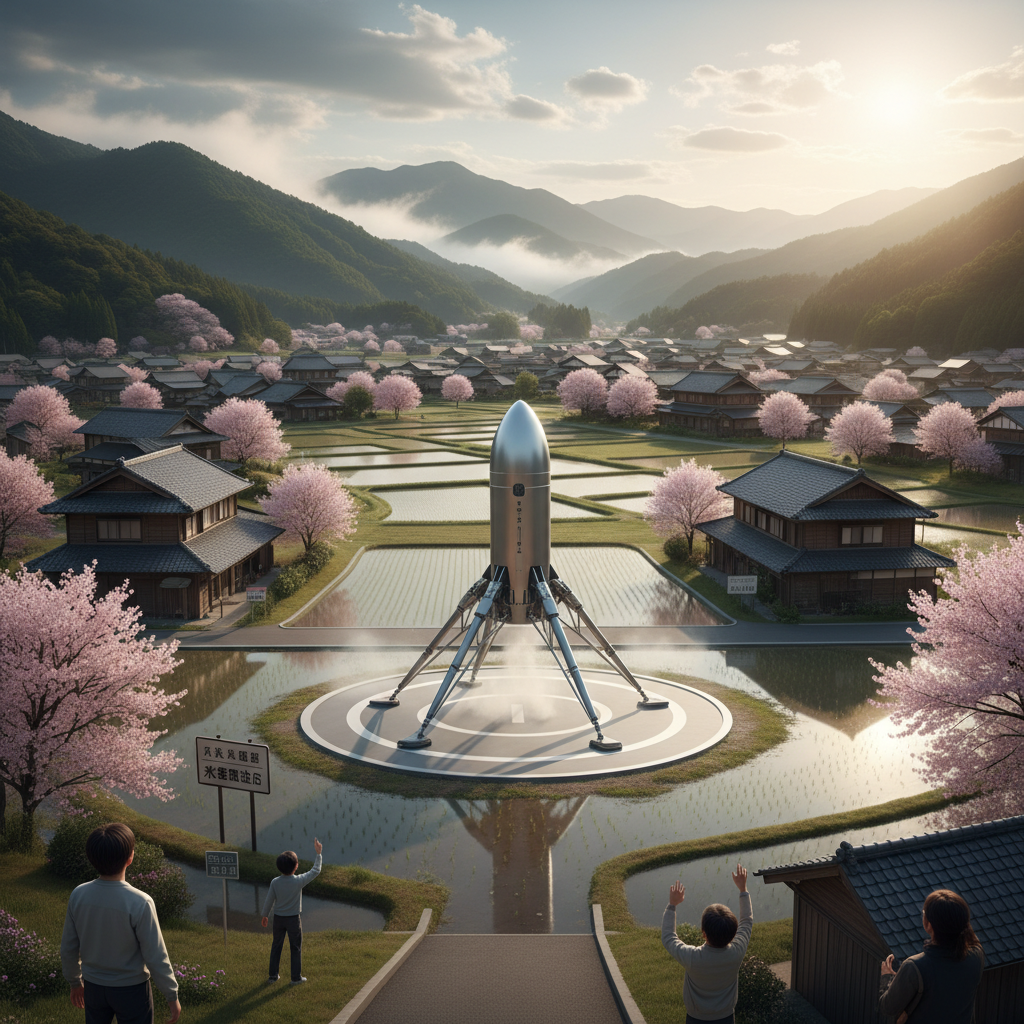
The test was conducted in Taiki Town, a small area in Hokkaido, Japan, which is progressively turning into a national space center. Supported by public and commercial sector alliances including the Japan Aerospace Exploration Agency (JAXA), Taiki has been presenting itself as the core of Japan’s expanding private space sector. Now, with Honda’s test flight, the town boasts still another accomplishment to add to its resume.
Built by Honda’s research and development division, the rocket soared to 890 feet during test flight. It stayed airborne for just under a minute, 56.6 seconds exactly, then dropped and landed 37 centimeters from the target zone. On a first effort, precision like that is rare; Honda made it happen.
Equipped with four retractable legs, the rocket stood slightly under 21 feet tall and weighed more than 2,800 pounds. These supported the launch as well as helped the vehicle stabilize during its flawless return to Earth. Though globally speaking, this is a small-scale rocket, for Honda it represents a significant victory.
This goes beyond simply a case of a car company experimenting for publicity. Though the firm has been rather quiet about its development, Honda has been working behind the scenes on space tech since 2021. Particularly from its automotive and robotics divisions, its approach is unique in how it is recycling and modifying current technologies.
For instance, sensors, obstacle detection and control software used in Honda’s self-driving cars are now guiding rockets through flight and landing. Honda is just using its knowledge in control systems and real-time data to vertical takeoff and landing scenarios, not from scratch building an aerospace division.
It follows: Already demonstrated by a working, reusable rocket system is precise launch and landing capability.
That concentration on reusability is absolutely vital. SpaceX has demonstrated the great value in rockets that can be flown multiple times, drastically lowering launch costs and enabling more environmentally friendly space access. Build once, fly many times is Honda’s guiding principle as well.
Great Objectives Ahead: Suborbital Flight for 2029
Although this flight is still low-altitude, Honda’s aspirations are far higher. The company has set a clear objective: by 2029, it wants to be able to launch suborbially. That would entail launching rockets beyond the Kármán line, the generally acknowledged limit of space that lies roughly 62 miles (100 kilometers) above sea level.
Though it would be a major technical accomplishment, a suborbital launch would not place satellites into orbit. It would create hardware, navigation system, and maybe tiny payload testing possibilities. Should Honda choose to follow full orbital missions, it also brings the vehicle one step closer.
Honda at this point has not committed anything regarding commercializing the rocket system. The project is still in the research and development stage, thus choices regarding commercial uses will rely on future development, economy demand, and cost. Still, the drive is quite clear.
Being able to operate satellites in-house could provide Honda a strategic advantage as businesses all around rely more and more on satellite networks — for data, communication, and vehicle tracking. It could support worldwide logistics systems to autonomous driving infrastructure.
Taiki Town, the test site, merits discussion on its own. Originally a small coastal town, it is now a major player in the expanding private space industry of Japan. Strong support from JAXA and companies like Honda choosing it for important tests help the town to become a major participant on the national scene.
Its remote enough for safe rocket testing but accessible for development and support makes it perfect for next space missions. Places like Taiki may become launchpads not only for rockets but also for the whole aerospace future of Japan as more Japanese companies migrate toward independent space projects.
New Frontier for a Legacy Brand
Honda’s triumph this week lacked livestreams or pyrotechnies. Dramatic countdowns or famous astronauts were not present. But the accuracy, control, and execution on exhibit reveal a quite different picture—one of deliberate planning and technical discipline.
Although the company is still in the early phases of space development, this test shows it is serious. It is moving boldly, measured toward spaceflight using the strengths it already possesses: in automation, robotics, and systems engineering.
It remains to be seen whether Honda finally takes front stage in aeronautical design. Still, it has something even more valuable right now: momentum.
And space travels start from this point.