- calendar_today August 12, 2025
.
The U.S. and India have enjoyed one of the most productive relationships in the post–Cold War era for the better part of the past 25 years. This was a relationship built on mutual trust, diplomatic cooperation, and a shared interest in countering China. Now, amid oil politics, trade tariffs, and global realignments, both sides have hit one of the lowest points in their relations.
“The trust is gone,” said Evan Feigenbaum, a South Asia analyst at the Carnegie Endowment for International Peace. “We’re in a situation in the U.S.-India relationship where the premises and assumptions of the last 25 years — that everybody worked very hard to build, including the president in his first term — have just come completely unraveled.”
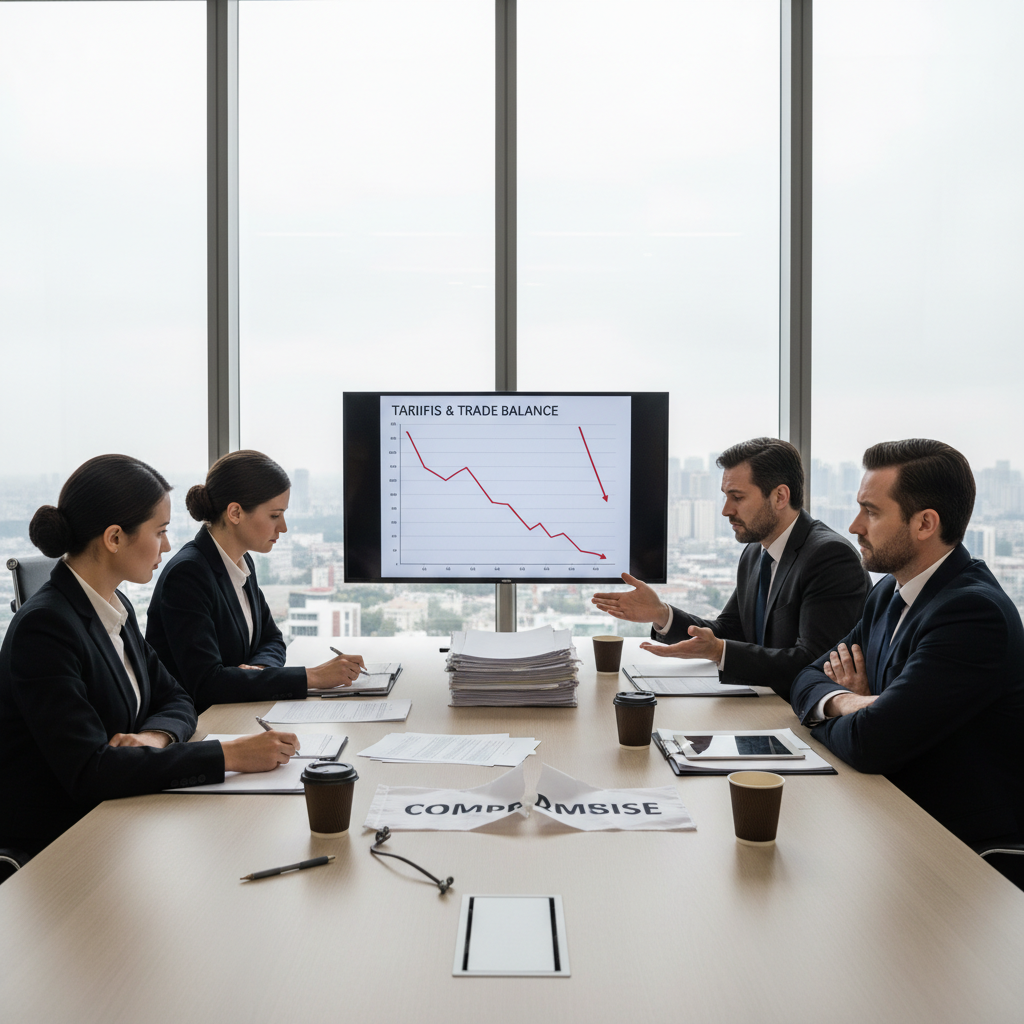
The recent tariffs that President Donald Trump levied earlier this year on a wide range of Indian imports sparked an already-tense trade relationship between the two countries. Trump’s move to impose a tariff that initially started at 25 percent and is slated to increase to 50 percent on August 27 came in response to India’s continued purchases of Russian oil, even as it touts its support for Ukraine. The tariff, which Trump and his allies hoped would force India to stop buying Russian oil, seems to have had the opposite effect.
India’s national security adviser recently visited Russia, while Foreign Minister Subrahmanyam Jaishankar and Chinese Foreign Minister Wang Yi also held top-level meetings with their Russian and Indian counterparts, respectively. Modi is also set to make his first trip to China in over seven years, while Russian President Vladimir Putin is also slated to host Modi in Moscow before the end of the year. Many see this pivot to the East as more than a symbolic gesture.
In India, public sentiment has also soured as many Indians see the Trump tariffs and condemnation from Washington as undue interference in their country’s foreign policy. “They’re signaling very clearly that they view that as interference in India’s foreign policy, and they are not going to put up with it,” Feigenbaum said.
After early war-weariness, state-run Indian refiners had begun purchasing Russian oil after being offered a discount of six to seven percent on the benchmark price. Russian oil now makes up 35 percent of India’s crude imports and could soon cross 40 percent, up from 0.2 percent before the Ukraine war. Russia, for its part, has also upped the ante, indicating that it will expand energy and weapons sales to India. Deputy Prime Minister Denis Manturov said Russia will continue to export crude and oil products, thermal and coking coal to India, and there is “potential for the export of Russian LNG.”
Politics and Performance
Michael Kugelman, South Asia analyst at the Washington-based Wilson Center, noted that Trump’s tariff announcement was not the only thing that set India on this new path. “We’ve seen indications for almost a year of India wanting to ease tensions with China and strengthen relations, mainly for economic reasons. But the Trump administration’s policies have made India want to move even more quickly,” Kugelman said.
While some of New Delhi’s foreign forays might be “performative,” Feigenbaum added that “India is going to double down on some aspects of its economic and defense relationship with Russia — and those parts are not performative.”
India had, even before the Ukraine war, started reducing its dependence on Russian arms, diversifying its procurement from other U.S., French, and Israeli systems. “Energy is different, and when the invasion began, this trade with Russia rekindled,” said Kugelman. For many in India, the Ukraine war represents a vindication of the policy that “the U.S. can’t be trusted, whereas Russia can — because Russia is always going to be there for India no matter what.”
The optics also help Modi at home. He has been using his approach on the Russia-Ukraine issue to project himself as a leader who is tough and principled on national sovereignty and one who will protect the livelihoods of India’s farmers, small businesses, and young job seekers. These are all issues with significant political weight domestically. Kugelman said Modi had already spoken about issues that India was not supposed to have, including tariff concessions and even bringing back workers. “Because of those concessions, India needs to be careful about signaling further willingness to bend. This is one reason there was no trade deal — Modi put his foot down,” Kugelman said.