- calendar_today August 23, 2025
.
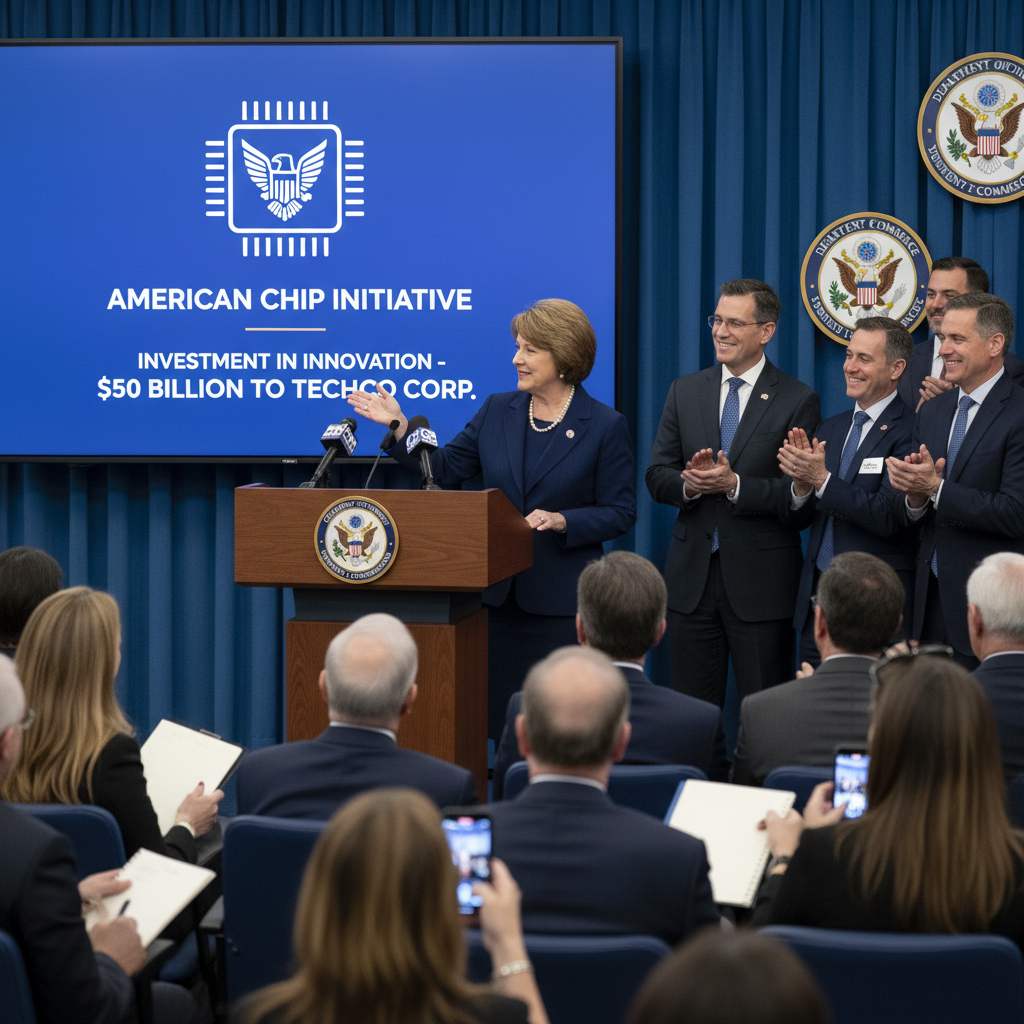
President Donald Trump has made the federal government Intel’s biggest investor after he agreed to acquire 10% of the ailing U.S. chipmaker. The decision, which ends years of resistance by many Republicans to the idea of the government intervening in private businesses, has provoked outrage among conservatives who are otherwise staunch Trump supporters.
The president has called the move a “great investment,” arguing that he’s enriched the United States “many, many billions of dollars” and made the country “richer and richer.” Trump has also suggested that he will do more to engineer such transactions: “I hope I’m going to have many more cases like it,” Trump said during a White House speech on Monday, signaling that he’s embracing a style of economic policymaking that for years was known as industrial policy. His critics are beginning to ask how far down that road he’ll go.
For many conservatives, Trump’s decision is potentially a step into socialism. A common definition of socialism, since at least the Cold War, is government ownership of the means of production for the good of all of society. By that standard, they say, Trump’s move is indistinguishable from the economic systems in China or Russia.
Republicans saw the government taking control of Chrysler and General Motors in 2009 under President Barack Obama as an unprecedented expansion of federal power, but it was considered a temporary action to save those iconic American businesses. Trump allies say conservatives were mostly willing to go along with it then because Obama only had a tiny share of the companies (Obama’s stake in General Motors, which it acquired through bailout money, was under 10%). If Obama had decided to take a 10% stake in a private company like Intel, they say, Rush Limbaugh and conservative media would have called it communism.
Trump claims that’s not the case with his order, arguing that the government isn’t really buying stock in Intel but rather making an investment. He says he converted about $9 billion of government grants (those are basically loans from the U.S. Treasury that the Biden administration already agreed to give the company as part of President Joe Biden’s bipartisan Chips Act) into stock for the federal government, a move that he says immediately generated $10 billion to $11 billion in value for taxpayers. “So what the hell’s wrong with that?” he asked. “Why are ‘stupid’ people unhappy with that?”
Conservatives were quick to pounce. Larry Kudlow, who was Trump’s top economic adviser, said on Fox Business that he was “very, very uncomfortable with that idea.” Steve Moore, another of Trump’s informal economic advisers, said, “I hate corporate welfare. That’s privatization in reverse. We want the government to divest of assets, not buy assets. So terrible, one of the bad ideas that’s come out of this White House.”
Editorials in National Review have warned that “government shouldn’t get into the chip business.” Senator Thom Tillis called the deal “kind of an interesting thing because now you’re talking about semi-state-owned enterprise a la CCCP. China, Soviet Union, the whole nine yards.” Senator Rand Paul tweeted: “Wouldn’t the government owning part of Intel be a step toward socialism? Terrible idea.”
Progressives cheered the news. Senator Bernie Sanders celebrated the order as an example of how the government can use its power to make industries work in the public interest. Secretary of Commerce Howard Lutnick flew to Trump’s defense, telling Laura Ingraham, “That is not socialism. That’s the best businessman in the United States of America in the Oval Office doing fair things for us.”
Intel has warned in a SEC filing that the deal could have various “negative effects” on its business, such as making it less likely to get government grants, reducing global sales, and subjecting it to greater government oversight and regulation. The company, which just announced a 15% layoff, has seen its stock price plummet this year, and it’s now worth only about $110 billion on the market. (Shares rose 4% after Trump’s announcement, which was better than the Dow Jones Industrial Average’s performance on the day.) The Wall Street Journal reported that Trump initially forced Intel CEO Lip-Bu Tan to resign for old comments he had made in praise of China. The two met at the White House, and Trump had a change of heart: “I liked him a lot, I thought he was very good,” Trump said.
Trump’s decision comes with other potential risks. The government is pledging not to have voting rights as part of the deal, but many expect that Trump will use his power as the United States’ largest shareholder to influence the company.
And if the deal is a boon for taxpayers and Intel’s turnaround, Trump will take all the credit. But if it doesn’t work out, they are on the hook for billions of dollars in losses. Trump has already promised to do more of these deals, so this could just be the beginning.
The Intel investment marks a sea change in how the federal government and American businesses will interact in the 2020s. And it’s also another sign of how much Trump has changed the Republican Party’s approach to economics.