- calendar_today August 28, 2025
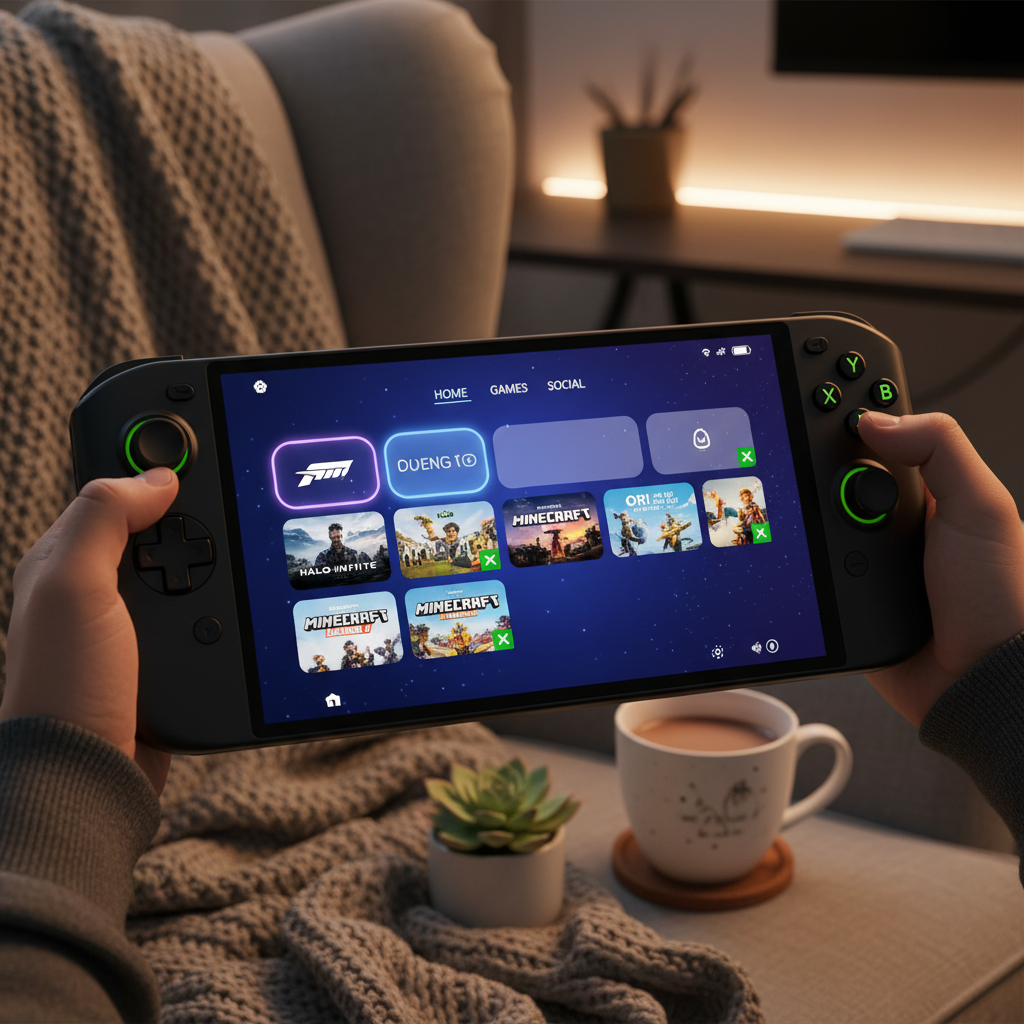
Microsoft has launched a dedicated Xbox-branded interface for portable Windows devices as part of its significant entry into handheld gaming. The interface that Asus helped develop will debut on the ROG Xbox Ally. The innovative UI uses a full-screen tile-based layout optimized for touchscreens and gamepad navigation to deliver a console-like experience unlike the traditional Windows desktop layout.
The handheld gaming industry has been mostly influenced by Valve’s Steam Deck which runs on SteamOS a Linux-based operating system. SteamOS cannot run every Windows game directly but maintains compatibility with numerous titles through Proton which has shown remarkable development since its inception. Although this system performs remarkably well, it does not function as a perfect Windows replacement and still presents compatibility problems for certain users. The combination of its gaming-centered design with high performance efficiency has earned it significant market traction.
Microsoft aims to combine Windows flexibility with a gaming console’s streamlined user experience through their new Xbox UI. The Xbox UI from Microsoft enables users to access the extensive Windows game library through a portable format that delivers an intuitive gaming experience. Microsoft announced that the new UI will be released first on the ROG Xbox Ally and will later be available on other ROG Ally models. Starting in 2025 Microsoft will continue their rollout of the new Xbox UI to other Windows handheld devices.
Microsoft has not directly linked this interface to its “Windows Handheld Mode” concept from 2022 but the similarities between them are evident. The initial project presented at an internal hackathon sought to address Windows handheld limitations including inadequate touch support and restricted controller functionality through the development of a streamlined gaming-specific user interface.
Along with a user-friendly appearance the new Xbox UI delivers substantial boosts in system performance. Microsoft reports that switching from the traditional Windows desktop helps save RAM and energy consumption by several gigabytes. The efficiency gains convert straight into better performance and extended battery life which are essential for handheld gaming systems. The conventional ROG Ally system required users to operate a complete Windows environment together with Asus’ Armoury Crate software which created extra system load. The Xbox UI now connects these differences while maintaining minimal system impact.
The UI redesign keeps user access to the Windows desktop unchanged. Users will have access to the traditional interface but must start it manually. The dual system setup allows users to switch from a gaming-focused interface to complete desktop access as required.
Valve reinforces its market presence through ongoing enhancements of SteamOS and Proton. Proton has grown more powerful by supporting an expanding list of Windows games and now operates on additional non-Steam Deck hardware such as select ROG Ally models. Linux achieved over 4% of the global desktop market share thanks to SteamOS advancements marking an important achievement for the OS which used to be on the margins of mainstream gaming.
Recent advances in AI and security have caused Microsoft to postpone their response to these changes. Handheld gaming systems remained unthreatening to Windows-powered PCs for several years. The Steam Deck’s achievements coupled with the development of alternative platforms such as SteamOS have undermined the previous belief. Now, Microsoft is finally responding.
Key takeaways from Microsoft’s move include:
- The ROG Xbox Ally will launch a new Xbox UI which will later extend to additional devices beginning in 2025.
- The new interface removes the standard Windows desktop in favor of a full-screen tiled system designed to enhance gaming performance.
- Microsoft states that their new UI improves RAM efficiency while reducing energy consumption and enhancing system performance.
- The traditional desktop UI offers users complete control over their experience with their devices.
The success of Microsoft’s Xbox UI as a game-changer or a catch-up move will be determined by its adoption rates and performance in comparison to SteamOS. But one thing is clear: Microsoft is finally taking handheld gaming seriously.