- calendar_today August 27, 2025
AI Upheaval Comes to Arizona: How the Workplace Will Transform by 2030
Artificial Intelligence (AI) is radically reimagining the world of work, and Arizona workers are no exception. As automation and AI technologies grow in strength and ubiquity, the World Economic Forum estimates that 50% of all U.S. jobs will be remade by 2030. Arizona, with its growing tech industry and culturally diverse workforce, will feel the shift in substantial measure.
No matter if you work in retail, logistics, healthcare, finance, or construction, chances are your job—or the way it’s done—will be significantly different in five years. But disruption doesn’t necessarily mean loss. It can mean opportunity.
Let’s take a closer look at which Arizona jobs will be most vulnerable to being replaced by AI, which industries are poised to grow, and how workers can get ahead.
Jobs in Jeopardy: Automation Unleashed
Arizona’s economy relies on sectors like retail, customer service, manufacturing, transportation, and healthcare, many of which involve repetitive, low-level tasks that AI is quickly learning to automate.
The jobs most likely to be automated in Arizona are:
- Retail salespersons and cashiers – Self-scan, online ordering, and AI inventory systems are the new norm.
- Customer service representatives – Virtual support and AI-powered chatbots are replacing good old-fashioned call centers.
- Warehouse and delivery personnel – Sorting, packaging, and even delivery (via drones and robots) are advancing at incredible speeds.
- Administrative assistants – AI is now capable of managing calendars, typing out data entry, and sending emails with ease.
In urban areas like Phoenix, Tucson, and Mesa, where service occupations predominate, the majority of workers will need job redefinition preparation or retraining.
The Flip Side: AI Will Create New Careers
Though AI will undeniably displace some employment opportunities, it will also require new technology-driven careers that did not exist just a few years ago. Those careers will require different skills, most constructed around critical thinking, data savvy, and human judgment.
Some of the new AI-related Arizona careers could be:
- AI and machine learning specialists
- Cybersecurity specialists
- Cloud infrastructure developers
- Healthcare data coordinators
- Drone technology specialists
- Sustainability and energy analysts
- Remote tech support specialists
Arizona’s expanding technology industry, particularly in the “Silicon Desert” around Phoenix, may spearhead these new jobs.
Which Arizona Industries Will Transform?
Here’s what some of the major industries might look like:
- Healthcare: AI might help with diagnostics, appointment scheduling, and patient monitoring, allowing staff to concentrate on treating patients.
- Construction: Arizona’s red-hot real estate and infrastructure industries might experience greater levels of planning, surveying, and on-site robotics automation.
- Agriculture: Artificially intelligent irrigation and crop tracking can render Arizona’s agricultural industry more efficient and less manpower-intensive.
- Education: AI-powered learning programs and virtual guidance will transform student learning and assessment processes.
These developments will require workers to learn new digital competencies and adapt to hybrid roles that integrate human and machine labor.
How Arizona Workers Can Prepare
It does not need everyone to be a software engineer to prepare for an AI future. It needs lifelong learning and continuous updating of industry trends.
1. Upskill and Reskill
There are affordable programs available in coding, business technology, healthcare informatics, etc., from local schools like Arizona State University and Maricopa Community Colleges. Workers need to focus on gaining digital fluency and problem-solving abilities.
2. Explore Online Learning
Platforms like Coursera, Udemy, and LinkedIn Learning make it easy to gain new skills from home, many for free or at low cost.
3. Monitor Industry Developments
Stay informed about how AI is impacting your field and look for certifications or side projects that increase your value in the job market.
4. Tap Into Local Support
Arizona state is beginning to invest in workforce development, such as grants, apprenticeships, and retraining for displaced workers.
Employers Must Act, as well
Arizona employers have a stake in getting their workforces ready for change. That includes:
- Offering in-house training and development
- Sharing plans for job changes and automation
- Assisting workers in transitioning into higher-skilled employment
- Emphasizing human-intensive tasks that AI cannot do
- Forward-thinking businesses will put money into humans, not just machines.
A Glimpse of Arizona’s Workforce in 2030
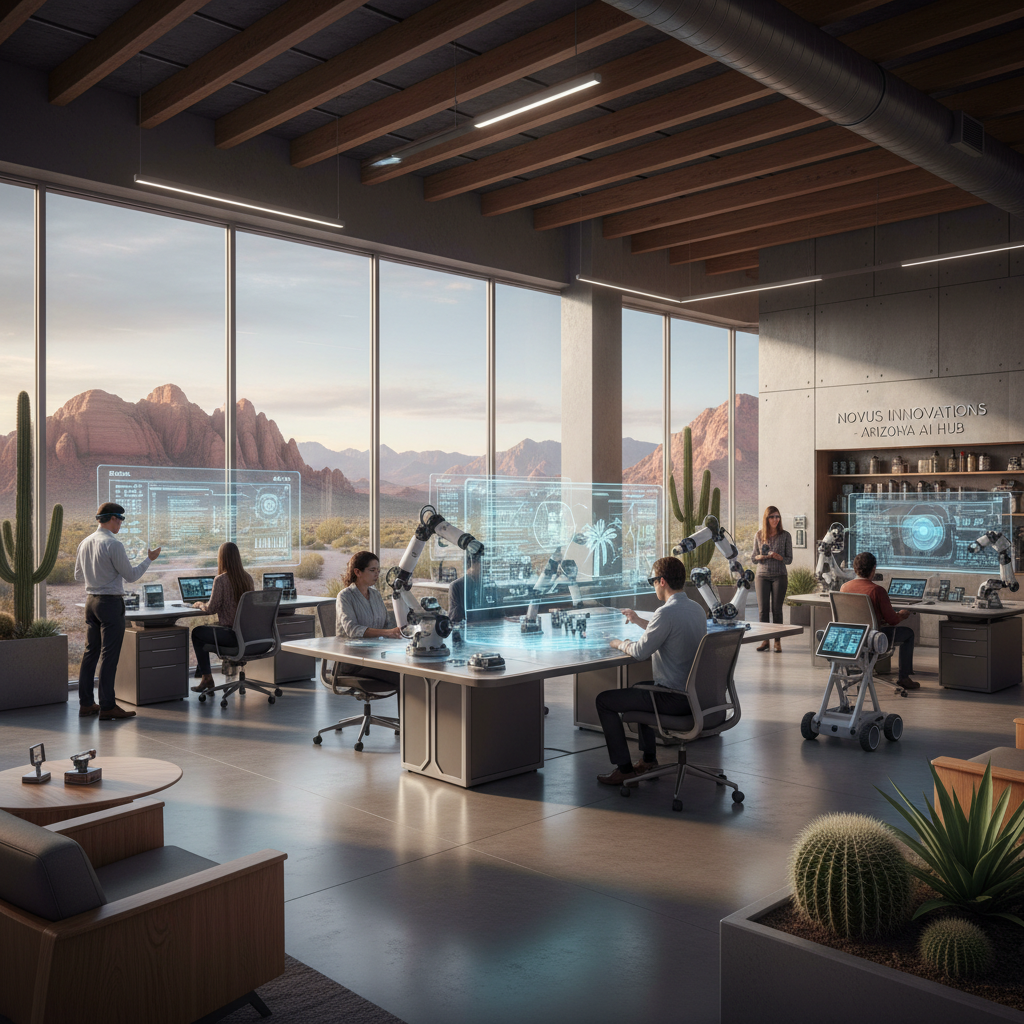
The future will not be robot-filled, but it will be tech-driven. This is what the Arizona employment landscape might be:
- Malls run by small collectives, with AI managing stock and consumer questions
- Hospitals with AI assisting in diagnosis, so that doctors can concentrate on treatment
- Building sites where drones do the surveying and robotic arms build
- Farms that depend on predictive AI software to optimize planting and harvesting
- Remote workers collaborating in perfect sync with intelligent tools and virtual teams
Work will be more high-tech, but more human-oriented—strategy, creativity, and people-oriented.
Final Thoughts
Arizona is used to innovation and growth. As the wave of AI hits the national labor force, the Grand Canyon State has a unique chance to lead the way towards adjustment.
While 2030 will be filled with immense alteration, it can also be a sign of fresh beginnings for workers willing to change, learn, and thrive in a culture of AI.
The workplace of the future refers to now. Arizona simply needs to go at it full throttle.