- calendar_today August 18, 2025
Nvidia, which leads the graphics technology sector, is investigating ways to revolutionize gaming through artificial intelligence. Nvidia’s powerful GPUs stand out for their visually stunning graphics, but the company has now developed an experimental AI tool called G-Assist. This locally-run tool seeks to optimize personal computers while improving game performance.
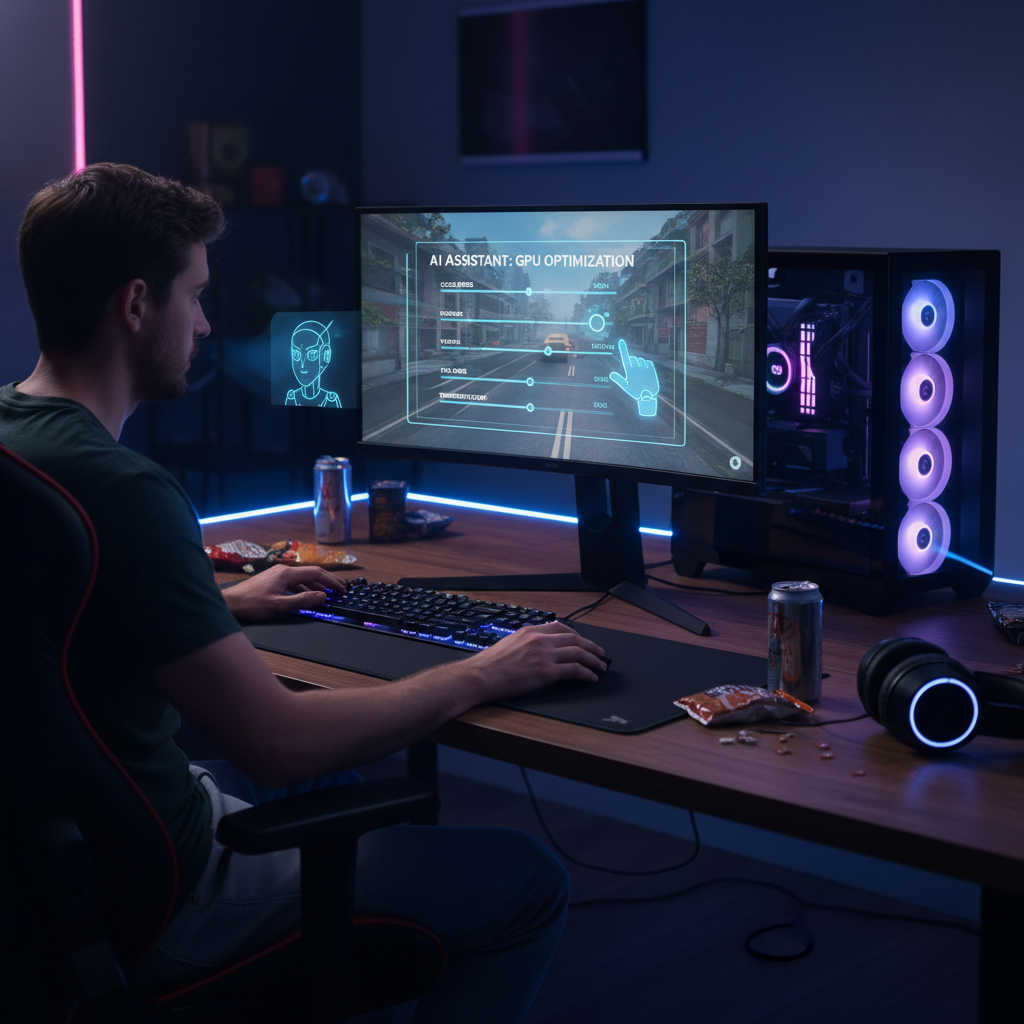
The Nvidia desktop application provides access to G-Assist through an on-screen overlay, which enables users to control an AI assistant using voice or text commands while surpassing basic system monitoring functions that may transform gamers’ hardware and software interactions.
G-Assist introduces a range of intriguing capabilities. Users have the option to inquire about general topics, including questions like “How does DLSS Frame Generation work? “, and receive informative, AI-driven responses. The AI possesses the ability to handle precise system-level configuration settings.
G-Assist activation enables gamers to access instantaneous system operation analyses alongside dynamic charts that display real-time data. Users can command the AI to modify game settings and control different features. G-Assist enables users to achieve maximum performance through GPU overclocking and provides an estimate of expected performance improvements.
With the PC market moving towards “AI laptops,” Nvidia showcases AI features in desktops using dedicated GPUs. Most AI applications run in the cloud, but Nvidia’s G-Assist functions on local machines using GeForce RTX graphics card power. The G-Assist tool operates using a small language model that Nvidia has optimized specifically for local execution.
Installing the basic text version needs 3GB of storage space while voice control requires an additional 3.5GB, resulting in a total requirement of 6.5 GB. To operate G-Assist requires a GeForce RTX 30, 40, or 50 series GPU with a minimum of 12GB VRAM. The system’s performance adjusts according to GPU capabilities, and future updates will include laptop GPU support.
The public release displays promising features but does not reach the integration depth of prior demonstrations where G-Assist provided in-game assistance. At this time, only a limited number of games have achieved this integration level which includes Ark: Survival Evolved. Through enabling third-party plug-in support Nvidia has expanded G-Assist’s capabilities.
The AI assistant can communicate with hardware from Logitech G, Corsair, MSI, and Nanoleaf to achieve features like thermal profile adjustments and LED lighting synchronization.
Operating G-Assist directly on the GPU creates several benefits but also leads to some technical obstacles. Processing data locally delivers advantages, including better privacy protection and faster response times. However, it also introduces performance considerations. Interacting with G-Assist during RTX 4070 testing resulted in a significant rise in GPU utilization.
AI inference computations, which generate responses, affect current tasks and especially intense gaming experiences. Baldur’s Gate 3 achieved approximately a 20% frame rate reduction while processing with G-Assist at maximum graphical settings. Systems that run close to their performance capacity may see further performance bottlenecks when using G-Assist. G-Assist functions better when not processing demanding games, yet it needs powerful GPUs for heavy, consistent usage.
The Promise of G-Assist
G-Assist demonstrates its experimental stage through its intermittent slow operations and bugs. Users who need reliable performance should continue to adjust their system and game settings manually at present. G-Assist marks an important advancement in the utilization of AI processing capabilities inside gaming computers.
Future Implications
The development of GPU technology brings the possibility of running both high-performance games and advanced AI models simultaneously closer to reality. Nvidia’s G-Assist currently provides a compelling preview of AI-powered gaming possibilities that show GPUs can become more interactive and smarter for users.