- calendar_today August 15, 2025
How Hyundai’s Expansion Will Reshape Arizona’s Manufacturing and Job Market
Introduction
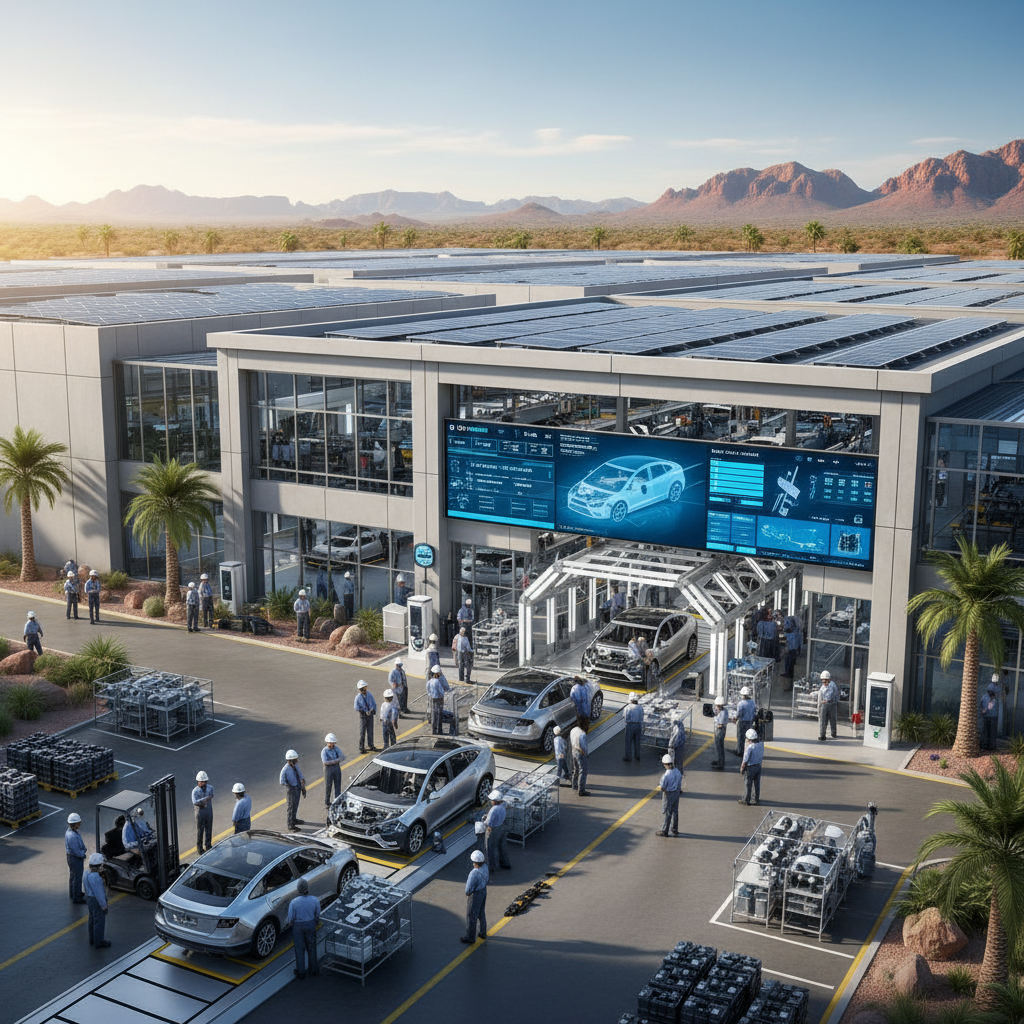
This last announcement from Hyundai regarding investing around $21 billion in its North American operations has brought about a revolutionary change in both the automotive and infrastructural industrial segments. With an emerging and developing industrial hub around advanced technology focus, Arizona promises to undergo quite a few transformations through this investment. This change is implied through the job creation, enhancement of supply chain networks, and further emergence of Arizona in the automotive re-contextualization.
As Hyundai continues its shift in the direction of electric vehicles (EVs) and sustainable manufacturing, so also do businesses and workers in Arizona get ready to capitalize on the opportunities afforded by this investment.
Effects on Arizona’s Economy
Hyundai’s investment is clearly going to have quite a far-reaching impact on Arizona’s economic landscape, especially in these dimensions:
1. Job Growth and Workforce Development
The expansion is anticipated to create thousands of jobs in a variety of sectors, including manufacturing, engineering, logistics, and technology. As the demand for skilled labor increases, the states’ vocational training centers and universities may be considering creating programs that train workers for a future in EV production and advanced manufacturing.
2. Improve the Manufacturing Sector
Hyundai’s investment will strengthen Arizona’s industrial base through increased demand for suppliers, production facilities, and related infrastructure. Local manufacturers producing auto parts, battery components, and electronic systems are likely to grow significantly as they get into Hyundai’s rapidly expanding supply chain.
3. Moving Forward with Innovation and Sustainability
Hyundai’s shift to electric vehicles and sustainable manufacturing fits perfectly with Arizona’s developing green energy and technological advancements. Hence, increased investments in research and development will result in advancements in battery technologies, and integration with renewable energies for the next generations of vehicles.
4. Infrastructure and Warehousing Development
Hyundai’s expansion will likely bring about the growth of industrial real estate and transportation infrastructure in Arizona. Such development will include a manufacturing plant to a logistics hub and better energy grids that will now have the capacity to handle larger production volumes.
The Busy Arizona Businesses and Workforce
The preparation that industry leaders, educational institutions, and local businesses are doing for the expansion of Hyundai includes:
- Improving Training and Development for Workforce-The schools and vocational training institutes will revise their curricula to put everything in line with what the industry demands.
- Creating Supplier Alliances: Arizona-based suppliers are looking for partnerships for integration into Hyundai’s growing manufacturing operations.
- Going Sustainable: Planting energy-efficient operations and optimizing supply chain paths to become aligned with green activity at Hyundai.
- Investing in Infrastructure – State and local authorities are assessing necessary upgrades to roads, energy systems, and industrial zones to accommodate Hyundai’s growth.
Opportunities for Arizona Residents and Businesses
Maximizing Hyundai’s investment can be anything proactive action for residents and business owners of Arizona, such as:
- Job Search: Employees need to consider upskilling education for EV manufacturing and other robotics and supply chain management practices.
- Industry Networks Enterprise: Companies can decide to engage Hyundai’s suppliers and logistics partners.
- Investment into Nunancing: Such as in exploring battery efficiency and AI-based vehicle systems, technology entrepreneurs may look at opportunities in early emerging auto technologies.
- Being an Eye on Industry Trends: Businesses should keep a close watch on Hyundai’s investment-led initiatives as early signals set to shift in the market may indicate changes warranting strategies in approach.
Conclusion
This investment by Hyundai worth $21 billion will catalyze to transformation the economy of Arizona through creation of additional job opportunities, development of the local manufacturing environment and improvement towards technological advancement. Of course, the change will be electric and sustainable solutions, as all industries in Arizona will have a wonderful opportunity for growth and innovation.
Adopting these changes and trends makes Arizona relevant as a state that deems itself the modern-day home of the future when it comes to advanced automotive production and manufacturing.